Recommended System: Anthbot US
Wire-free centimeter-level RTK satellite navigation, dual cutting discs, and intelligent slope climbing up to 45% grade for residential turf.
Affiliate disclosure: We may earn a commission from partner links (for example Anthbot) at no extra cost to you. Editorial opinions stay independent. Read our affiliate disclosure where published.
Late August: stop adding stress
Late August can still behave like midsummer. Before buying seed or fertilizer, inspect whether the lawn is dormant, dry, diseased, compacted, scalped, or receiving uneven irrigation. Raise the mowing height within the range for the grass, use a sharp blade, and avoid heavy traffic on wilted turf. The goal is to arrive at cooler weather with living crowns and a clear diagnosis.
Water early in the morning according to soil need. Repair leaks and blocked heads instead of extending every zone. If cool-season turf has gone dormant, decide whether to maintain that state or provide consistent recovery moisture under local guidance. Repeated green-up and dormancy cycles waste plant reserves.
Inventory seed, soil, blades, rakes, hoses, and protective gear before the short repair window opens. Confirm the grass type and first expected frost. A plan made now prevents rushed work after temperatures improve.
Fall lawn care task table
| Task | Trigger | Action | Related guide |
|---|---|---|---|
| Mowing | Grass is actively growing and dry enough to cut | Keep the appropriate height and one-third rule; do not scalp for winter | Mowing height |
| Watering | Root zone is drying and rain is insufficient | Water early and measured; support new seed separately | Water frequency |
| Cool-season seed | Warm soil, moderating air, enough time before hard cold | Prepare soil contact, seed suitable grass, and keep seedbed moist | Lawn care basics |
| Weeds | Plant is correctly identified and actively growing | Pull or use a label-compliant method that does not conflict with seeding | Weed removal |
| Leaves | Layer begins shading or matting turf | Mulch light dry layers or collect heavy/wet volume | Mulch vs. bag |
| Tools | Each tool finishes its season | Clean, dry, inspect, sharpen, and store by manual | Yard tools |
Fall mowing height
Continue mowing while the lawn grows. The final mowing is not a single national event. Grass may continue growing after leaf drop, especially in mild periods. Let measured height decide. Removing too much at once exposes crowns and leaves clumps; leaving excessively long grass can mat under snow or leaves.
Keep the regular appropriate range for the species and local conditions, then make only modest end-of-season adjustments supported by local extension advice. A dramatic “winter scalp” is not a universal best practice. Inspect blade condition because torn fall leaves of grass are still injuries.
Alternate patterns where practical and avoid rutting wet soil. Blow or sweep clippings and leaves from pavement without sending them into drains. If the lawn is covered by leaves, clear enough to see obstacles before mowing.
Cool-season overseeding and bare-spot repair
Early fall is often the best cool-season seeding window because soil retains warmth, air temperatures moderate, and annual weed pressure begins to ease. The exact deadline depends on species and expected frost; seedlings need time to develop roots before harsh conditions. Late seed may germinate and fail, so check local timing.
- Diagnose the thin area. Fix traffic, shade, drainage, compaction, or irrigation problems first.
- Choose adapted seed. Match sun, use, region, and maintenance rather than buying a vague “all purpose” bag.
- Create soil contact. Remove loose dead material and loosen the surface without burying utilities or tree roots.
- Apply the labeled amount evenly. More seed creates competition and disease, not instant density.
- Keep the seedbed evenly moist. Use light cycles that prevent drying without runoff.
- Transition after establishment. Reduce frequency and encourage deeper roots as seedlings mature.
- Delay conflicting products. Observe seed and herbicide label intervals.
Warm-season lawns follow a different repair calendar. Fall overseeding with a temporary cool-season grass is a specialized aesthetic decision with water, competition, and spring-transition costs. Do not apply the northern repair template automatically.
Aeration and compaction
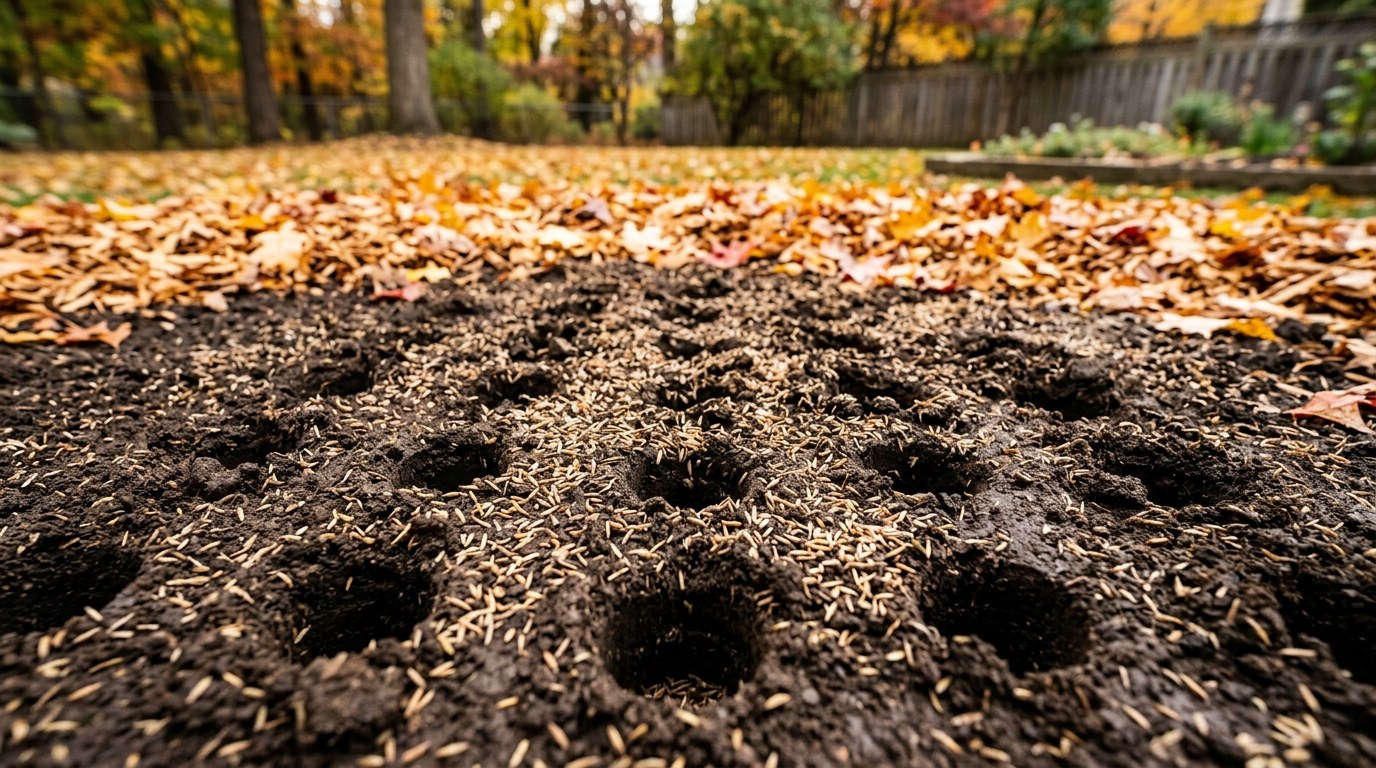
Core aeration removes plugs and can improve air, water movement, and root opportunity in compacted soil. It is most useful where compaction is real: repeated traffic, construction, heavy equipment, or dense soil. Randomly aerating a healthy uncompacted lawn adds work and can bring weed seed to the surface.
Time aeration when the grass can actively recover. For cool-season lawns, that is often early fall. For warm-season lawns, active late-spring or summer growth is generally more suitable. Soil should be moist enough for hollow tines to penetrate but not so wet that equipment smears or ruts it.
Mark irrigation heads, shallow cables, invisible dog fencing, drainage, and other buried features before work. Rental aerators are heavy and powerful; transport and operation may justify a professional.
Fall weed decisions
Many perennial broadleaf weeds remain identifiable and actively move resources to roots in fall, which can make control effective. Hand pulling scattered plants remains the narrowest option. A labeled selective treatment may fit larger confirmed patches, but it must be coordinated with new seed and weather.
Do not spray simply because the calendar says fall. Confirm the plant, turf species, temperature range, rain-free period, mowing interval, and reseeding restriction on the current label. Keep products out of leaves headed for compost unless allowed by local guidance.
Map crabgrass even if frost will kill mature plants. Its seed bank remains. Improve density and plan spring prevention timing where pressure justifies it. For poison ivy, use the dedicated urushiol-safe yard page; dead-looking material can remain hazardous.
Leaf management without smothering grass
A light dry leaf layer can be chopped into small pieces with repeated mower passes if fragments fall between grass blades rather than burying them. This returns organic material and reduces hauling. When chopped leaves still cover the lawn, collect some. Wet, heavy, or thick leaves mat, block light, hold moisture, and create slippery surfaces.
Rake or blow carefully around new seedlings. A mower bagger can collect leaves efficiently on established dry turf, but do not run over sticks or hidden debris. Follow local leaf collection and compost rules. Keep leaves out of streets, storm drains, streams, and drainage channels.
Visit the yard after windy days; sheltered corners can build a mat even when the open lawn is clear. Continue inspection until most trees have dropped and the grass stops growing.
Fall fertilizer and soil tests
Cool-season turf often uses fall nutrients effectively, but the right product and rate depend on grass, soil results, local law, and the rest of the year’s inputs. Test rather than guessing at lime or phosphorus. Do not apply fertilizer to frozen soil, pavement, drainage paths, or before a forecast that conflicts with the label.
Warm-season lawns should not receive late nitrogen that drives tender growth into cold. Regional guidance is essential. Sweep granules back onto turf and store leftovers in the original dry labeled container.
Fertilizer cannot solve shade, compaction, poor drainage, an incorrect grass, or a dull mower blade. Fix structural limits before increasing growth.
Blade, tool, and watering-system preparation
Inspect the mower blade before the last series of cuts. Sharpen a sound dull blade or replace one that is bent, cracked, thin, or unbalanceable. Follow the manual for fuel, oil, battery, cleaning, and storage. Never work under an energized mower.
Clean rakes, spades, pruners, and edging tools. Dry metal and protect approved surfaces. Drain hoses and exposed irrigation components where freezing requires it, but follow the system manufacturer or an irrigation professional for winterization. Compressed air can cause injury and system damage when used incorrectly.
Store chemicals locked and in original containers. Do not keep them where freezing or heat violates the label. Dispose through local programs rather than drains or household mixing.
Fall lawn care mistakes
- Seeding too late for roots to establish.
- Using a preemergence product that also prevents desired grass germination.
- Scalping the lawn as a supposed winter preparation.
- Stopping mowing on a date even though grass keeps growing.
- Letting wet leaves mat for weeks.
- Fertilizing a warm-season lawn into cold weather without local guidance.
- Aerating saturated soil and creating compaction or ruts.
- Forgetting sprinkler heads and buried lines before aeration.
- Storing a dirty mower with unmanaged fuel or battery.
Late August–September action block
During the last hot-weather stretch: water only from measured need, mow high, avoid traffic on wilted turf, and map brown patterns. When temperatures moderate: repair cool-season bare spots, core-aerate confirmed compaction, and address weeds without conflicting with seed. As leaves begin: mulch light layers, collect heavy volume, and keep new turf visible. Before freeze: finish tool care and irrigation shutdown appropriate to the climate.
For a compact execution list, use the Fall Lawn Care Checklist. Pair it with watering guidance, mowing and bare-spot basics, and the yard tools hub.
Cons / limitations
Product-specific limitations for this job — not a generic “UI changes weekly” list:
- Overseeding into leaf mats: Seed under wet maple sheets dies in the dark. Leaves first, seed second.
- Late high-N on warm-season turf: Nitrogen as bermuda is trying to harden off can increase winter injury. The northern “fall feed” slogan does not travel unchanged.
- Skipping blade service before last cuts: Dull last mows shred tips that then sit under leaves and disease.
Desk metrics (11 September 2026)
Desk method and documented ranges. We did not invent a Foxy Gardens test plot, yield, or timed field trial.
- USDA zone: USDA 4–6 fall window is short; USDA 7 has a longer cool-season seed period; USDA 9 fall is often still a warm-season season. Desk map.
- Soil pH: Lime in fall if the kit is below 6.0 pH for cool-season turf, targeting 6.0–7.0 pH by spring. Not a lime-rate plot.
- Fertilizer dose: Cool-season fall N often 0.7–1.0 lb per 1,000 sq ft; 19 min bag plus calendar check. We did not measure tiller counts.
- Desk duration: 18 min structured re-read of public USDA zone guidance, a soil pH kit procedure, and the fertilizer label math above.
Always disconnect main power sources—remove battery packs or unplug cords—before inspecting mower blades, clearing aeration tines, or handling sharp garden equipment. Keep hydroponic nutrient concentrates stored securely.
Practical guides curated by horticultural practitioners and yard care enthusiasts. Field-tested methods, verifiable steps, and zero automated fluff.
Frequently asked questions
When should I start fall lawn care?
Begin diagnosis during late-summer heat, then time repair to moderating weather and active grass growth.
Should leaves always be bagged?
No. Mulch light dry layers that disappear between grass blades; collect volume that still covers turf.