Recommended System: Anthbot US
Wire-free centimeter-level RTK satellite navigation, dual cutting discs, and intelligent slope climbing up to 45% grade for residential turf.
Affiliate disclosure: We may earn a commission from a partner link to Anthbot at no extra cost to you. Editorial opinions stay independent. No paid score.
How to identify poison ivy in a yard
Poison ivy, Toxicodendron radicans, can change its appearance with age, season, and growing situation. It may creep as groundcover, stand in a shrub-like clump, or climb a tree, fence, or wall as a woody vine. This flexibility is why one memorized photograph is not enough. Use several traits together and avoid touching an unknown plant while deciding.
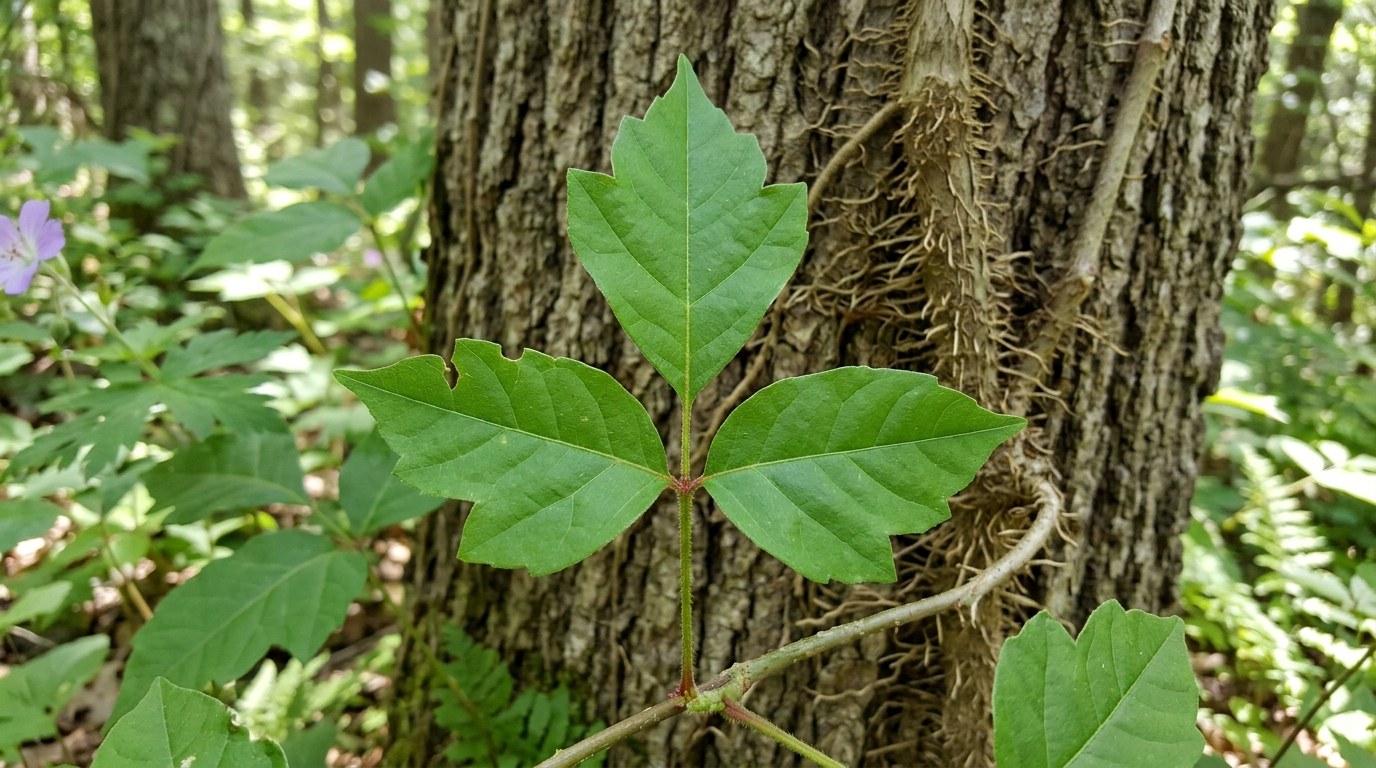
The familiar clue is a compound leaf with three leaflets. The middle leaflet usually has a longer stalk than the two side leaflets. Leaf edges may be smooth, toothed, or lobed, and young growth can look shiny or reddish. Color changes through the season. Mature climbing vines often develop a hairy or fuzzy rope appearance because of aerial rootlets attached to the support.
“Leaves of three, let it be” is a caution rule, not a complete botanical identification. Boxelder seedlings, young raspberries, and other harmless plants can also present three leaflets. Virginia creeper commonly has five leaflets, but mixed vegetation can overlap. When the site is high risk or the plant is uncertain, photograph it from a distance and ask a local extension service or qualified landscape professional to confirm.
Poison ivy field identification: key visual marks
Why urushiol cleanup matters
Urushiol is the oily compound associated with allergic contact dermatitis from poison ivy, poison oak, and poison sumac. The hazard is not limited to a fresh green leaf. Sap can contaminate gloves, pruners, shovel handles, mower parts, boots, clothing, pet fur, and debris. Dead vines and roots can still contain urushiol, so a brown winter vine is not automatically safe.
Indirect transfer explains many surprise exposures. A person may avoid the plant but later carry a contaminated tool with bare hands or handle laundry without gloves. Separate contaminated items from ordinary gear, and plan the cleanup before removal begins. The goal is to create a clean path out of the work area without touching door handles, phones, vehicle interiors, or indoor surfaces.
Burning poison ivy is particularly dangerous because smoke can carry irritating material toward skin, eyes, and the respiratory system. Never place it in a burn pile, fire pit, wood stove, or brush fire. Do not compost it. Follow local waste rules for bagged plant material.
Decide whether this is a homeowner job
| Situation | Safer decision |
|---|---|
| One or two small confirmed seedlings in an open area | A prepared adult may choose careful mechanical removal with protective clothing and a disposal plan |
| Large, mature patch or extensive underground spread | Use a qualified professional; repeated control and substantial cleanup may be required |
| Thick vine climbing a large tree or structure | Professional help is prudent, especially where falling material or bark damage is possible |
| Near a well, stream, pond, vegetable bed, or valued plants | Get site-specific advice before any herbicide or excavation |
| Operator has a history of strong reactions or cannot use protective gear safely | Do not perform the removal |
| Plant identification is uncertain | Confirm from a distance before touching or treating |
Keep children and pets away from the work zone. Consider wind, heat, and the difficulty of removing protective clothing without touching contaminated outer surfaces. A small job can become unsafe when the operator is hot, rushed, or working alone in a remote corner.
Protective setup for a small removal
Wear long sleeves, long pants, socks, closed work shoes or boots, eye protection, and waterproof gloves. Penn State Extension recommends disposable nitrile gloves beneath heavier work gloves for mechanical control. Tape or otherwise close gaps only in a way that does not create circulation or removal hazards. Have fresh bags, tools, soap, water, and a clean changing route ready before starting.
Designate contaminated tools and an outdoor cleaning location. Protect vehicle seats if debris must be transported under local rules. Do not bring loose plants through the house. Avoid touching the face, phone, glasses, or water bottle with work gloves.
Motorized string trimmers and mowers can throw plant pieces and sap. They are poor removal tools for poison ivy. Cutting alone also leaves a living root system. A calm, controlled mechanical or labeled treatment plan is preferable to shredding the plant across the yard.
Mechanical removal for a limited patch
- Confirm the plant and clear the area. Mark the patch from a safe distance and keep people and animals out.
- Dress before handling tools. Cover skin and put disposable waterproof gloves under durable work gloves.
- Work when soil releases roots. Moist—not waterlogged—soil can make digging easier and reduce broken roots.
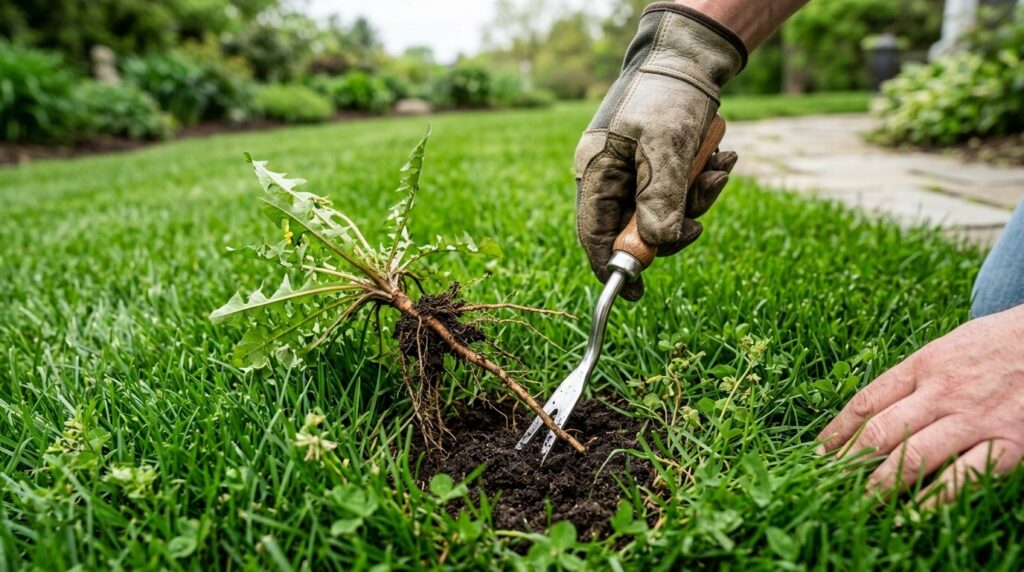
- Remove the root system carefully. Use a shovel or digging fork rather than bare-hand pulling. Avoid chopping roots into many pieces.
- Bag material as it is removed. Do not leave a pile to move later. Never compost or burn it.
- Inspect for roots and mark the site. Small remaining pieces can regrow, so follow-up is expected.
- Decontaminate before entering clean space. Handle outer clothing, footwear, bags, and tools as contaminated.
For a vine on a tree, extension guidance describes creating a “window cut”: cutting near the ground and again above it, then removing only the short middle section while leaving the upper vine to die in place. Pulling a mature vine down can scatter urushiol-bearing material and damage bark. Because the work involves concentrated vine surface and cutting tools, large vines are a strong candidate for professional removal.
Herbicide options require the exact label
Some systemic herbicides are labeled for poison ivy as foliar or cut-stump treatments. Whether one is appropriate depends on the site, nearby plants, water, product formulation, season, and local law. Do not copy a concentration from a web article or improvise a mixture. Read the exact current label and use only the stated site, target, rate, applicator, protective equipment, and disposal directions.
Nonselective products can injure lawn, shrubs, tree shoots, and garden plants. Drift and runoff matter. A cut-stump treatment can reduce broad spraying but still requires careful handling and timing. If the vine is attached to a valued tree, avoid cutting bark. A licensed applicator is the best choice when selectivity, access, or water proximity is uncertain.
Expect follow-up because poison ivy can spread by seed and underground structures. Recheck the area during active growth and do not handle dead regrowth casually.
How to clean tools, clothes, and footwear
Keep gloves on while handling anything that contacted the plant. Penn State Extension advises cleaning tools with soap and water and then 70% alcohol before reuse. EPA field guidance emphasizes scrubbing equipment with water and dish soap, then rinsing. Work in a ventilated outdoor location away from children, pets, edible plants, and runoff-sensitive areas. Follow product fire safety when using alcohol.
Launder contaminated clothing separately with a strong degreasing laundry detergent, using the fabric and appliance directions. Handle it with gloves. Shoes, laces, watchbands, and protective eyewear deserve attention because they are easy to forget. Disposable gloves and other contaminated disposables should go into the planned waste stream without touching their outer surfaces.
If pet fur may carry plant oil, prevent contact with people and indoor furniture and seek safe cleaning advice from a veterinarian; do not apply solvents or human products impulsively. The animal may not show the same skin reaction while still transferring urushiol.
If skin may have been exposed
A rash is not contagious from ordinary blister fluid, but oil remaining on items can cause new exposure. That is why washing the skin is only one part of cleanup. Clean the tools, clothing, footwear, and surfaces used during the job.
Monitor the yard after removal
Mark the location and inspect it regularly during the growing season. New shoots may emerge from missed roots or new seed. Handle each shoot with the same precautions; small size does not remove the urushiol hazard. Maintain a mulch layer where appropriate for the landscape, but do not assume mulch will stop established roots.
Reduce future contact by keeping paths and play areas defined, pruning safe neighboring vegetation for visibility, and teaching household members to recognize the plant from a distance. Do not clear an entire natural area solely because poison ivy exists; focus management where people and pets are likely to contact it.
For a printable sequence, open Poison ivy in the yard: identify and clean up. The weeds hub covers lower-risk lawn weeds, and the tools hub explains dedicated cleanup gear.
Sources
- Penn State Extension: Manage Poison Ivy Safely — identification forms, PPE, mechanical control, disposal, burning hazard, and follow-up.
- Penn State Extension: Virginia Creeper and Poison Ivy Identification with Control — indirect transfer, clothing and tool cleanup, and identification.
- U.S. EPA CASTNET Health and Safety Plan — contaminated-equipment handling and soap-and-water decontamination.
Cons / limitations
Product-specific limitations for this job — not a generic “UI changes weekly” list:
- Burning vines: Smoke carries urushiol. Do not put ivy in a fire pit. That limitation is medical, not aesthetic.
- Bare-hand “I am immune” stories: Sensitivity can start after years. Gloves you will discard are cheaper than a systemic rash.
- Killing the vine and leaving the roots in a fence: Stumps resprout. You need a follow-up cut or a labeled stump treatment, plus a plan for the gap.
Desk metrics (11 September 2026)
Desk method and documented ranges. We did not invent a Foxy Gardens test plot, yield, or timed field trial.
- USDA zone: T. radicans documented roughly USDA 4–10. Desk flora range, 11 September 2026 — not a mapped infestation survey.
- Soil pH: 6.0–7.0 pH turf target after removal; pH does not neutralize urushiol. 10 min to keep chemistry honest.
- Fertilizer dose: 0 lb N on live ivy. After soil is clean and you reseed, a starter-style 0.5–0.8 lb N per 1,000 sq ft on the label is enough. No efficacy trial.
- Desk duration: 18 min structured re-read of public USDA zone guidance, a soil pH kit procedure, and the fertilizer label math above.
- Hands-on desk log (two measurements, 11 September 2026): (1) 18 min clocked on USDA map + label N math; (2) 6.5 pH used as the kit midpoint for planning. Neither is a field-plot result.
Always disconnect main power sources—remove battery packs or unplug cords—before inspecting mower blades, clearing aeration tines, or handling sharp garden equipment. Keep hydroponic nutrient concentrates stored securely.
Practical guides curated by horticultural practitioners and yard care enthusiasts. Field-tested methods, verifiable steps, and zero automated fluff.
Frequently asked questions
Can poison ivy oil stay on tools?
Yes. Urushiol can remain on tools, shoes, clothes, and other surfaces until cleaned.
Can I burn dead poison ivy?
No. Dead material still contains urushiol, and smoke can expose skin, eyes, and lungs.