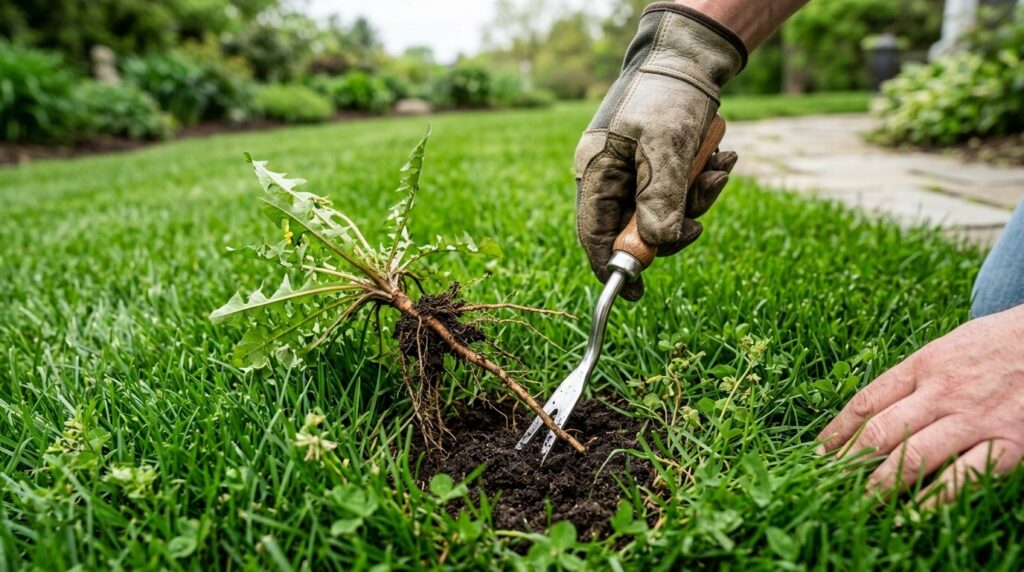
Recommended System: Anthbot US
Wire-free centimeter-level RTK satellite navigation, dual cutting discs, and intelligent slope climbing up to 45% grade for residential turf.
Affiliate disclosure: We may earn a commission from a partner link to Anthbot at no extra cost to you. Editorial opinions stay independent. No paid score.
1. Identify from a distance
Look for three leaflets, with the middle leaflet usually on a longer stalk. Edges may be smooth, toothed, or lobed. The plant may be groundcover, a shrub-like clump, or a climbing vine. Mature vines often look hairy where aerial roots grip a tree or structure.
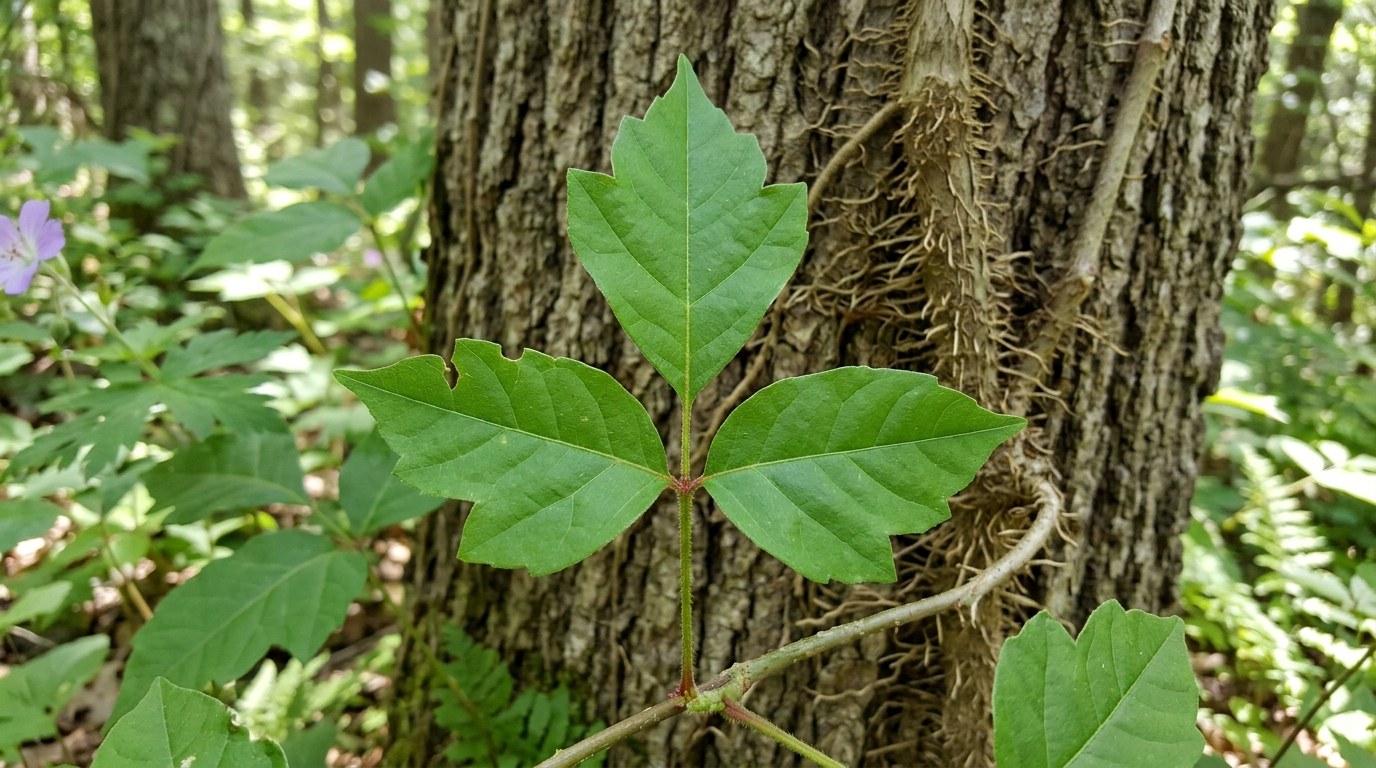
Three leaflets alone are not proof. Photograph the plant without touching it and compare several traits. Ask a local extension service or qualified professional when uncertain. Do not pull a mystery vine from a tree.
2. Decide whether to hire a professional
| Possible homeowner scope | Professional scope |
|---|---|
| One or two small confirmed plants in an open area | Large or repeated patch with extensive roots |
| Operator can wear and remove protective gear safely | History of strong reactions or inability to use PPE |
| Clear disposal and outdoor cleanup route | Vines high in trees, near structures, water, wells, or valued plants |
| No children or pets near the work zone | Identification, product selection, or safe access is uncertain |
Large climbing vines concentrate contact and can damage bark when pulled. A professional can use a cut-window or labeled treatment strategy while controlling debris. There is no prize for turning a hazardous patch into a do-it-yourself test.
3. Prepare the clean and dirty zones
- Keep children and pets away and choose calm, cool working conditions.
- Set out heavy disposal bags, tools, soap, water, and a clean route before touching plants.
- Wear long sleeves, long pants, socks, closed shoes, eye protection, and disposable nitrile gloves under durable work gloves.
- Keep a phone, drink, door handles, and vehicle interiors outside the dirty zone.
- Designate where tools and shoes will be cleaned outdoors.
4. Remove a small plant without spreading pieces
Work in moist but not waterlogged soil. Use a shovel or digging fork to loosen and lift the root system. Avoid chopping roots repeatedly; poison ivy can regrow from remaining structures. Place material directly into a bag instead of creating a pile.
Do not mow or use a powered string trimmer. Those tools can scatter sap-bearing pieces over clothing, exposed skin, and the yard. Do not compost removed material. Follow local waste rules for sealed bags.
5. Handle a climbing vine carefully
Penn State Extension describes a window cut for vines: cut near ground level and again above, remove the short middle section, and leave the upper vine to die in place. Do not pull a large vine down because rootlets and debris can fall, expose the worker, and damage the supporting tree.
This is a higher-risk job. Use a professional for thick, high, or inaccessible vines. Never burn the dead upper section later; dead poison ivy still carries urushiol.
6. Clean tools and hard equipment
Keep waterproof gloves on. Wash tools thoroughly with soap and water, scrubbing handles, joints, blades, and other contacted surfaces. Penn State guidance also recommends 70% alcohol after soap-and-water cleaning; use it only with appropriate ventilation and fire safety. EPA field guidance emphasizes dish soap, water, brushing, and rinsing.
Do not let cleanup water run into edible beds, ponds, streams, or storm drains. Keep cleaned tools separate until dry. Mark any tool intentionally dedicated to future poison-ivy work.
7. Remove and wash clothing without re-contact
Remove gloves and outer clothing so bare skin does not touch the outside surfaces. Handle contaminated laundry with clean waterproof gloves and wash it separately with a strong degreasing laundry detergent according to garment and appliance instructions. Clean shoes, laces, protective eyewear, and watchbands.
If a pet may have contacted the plant, keep it off furniture and away from people, then ask a veterinarian for safe cleaning guidance. Animal fur can carry urushiol even when the animal does not react like a person.
8. If skin may have been exposed
Wash promptly with soap and plenty of water, including under fingernails, and avoid touching other surfaces first. This page does not diagnose or treat a rash. Seek professional medical help for a severe reaction, breathing difficulty, or involvement of the face or eyes.
Oil left on tools and clothes can create a new exposure later, so complete the object cleanup even if skin has been washed. Ordinary blister fluid is not the source of fresh urushiol transfer; contaminated surfaces are the practical concern.
9. Monitor for regrowth
Mark the patch and revisit during active growth. Treat every new shoot with the same precautions. Small shoots still contain urushiol. Mulch may suppress seedlings but does not guarantee established roots are gone.
Keep play areas and paths visible, and teach household members the identification clues without asking them to touch the plant. Focus control where contact is likely rather than clearing an entire natural edge blindly.
Related yard guidance
Read the complete Poison Ivy in the Yard pillar for identification forms and decision boundaries. Visit Lawn Weeds for ordinary weed control and Yard Tools by Job for dedicated gloves, digging tools, and storage.
Sources
- Penn State Extension: Manage Poison Ivy Safely.
- Penn State Extension: Virginia Creeper and Poison Ivy Identification with Control.
- U.S. EPA CASTNET Health and Safety Plan.
Cons / limitations
Product-specific limitations for this job — not a generic “UI changes weekly” list:
- String-trimming vines: A whirling head aerosolizes urushiol. That is how faces and lungs get involved. Cut at the base with long-handled tools and bag, or hire.
- Composting the vines: Urushiol persists on stems. Yard-waste bags that your hauler accepts beat a home pile you will handle again in spring.
- Herbicide on mixed beds: Nonselective product on a fence line will kill the hydrangea behind the ivy. Shielding and timing are the job, not a stronger mix.
Desk metrics (11 September 2026)
Desk method and documented ranges. We did not invent a Foxy Gardens test plot, yield, or timed field trial.
- USDA zone: Eastern poison ivy (Toxicodendron radicans) is documented across roughly USDA 4–10. That range is a flora fact, not a Foxy Gardens transect.
- Soil pH: Ivy is not controlled by shifting 6.0–7.0 pH turf. 12 min to reject pH as a removal method.
- Fertilizer dose: 0 lb N on ivy patches — feeding the fence line fattens the vine. Repair grass later in the correct season at a normal 0.7 lb N per 1,000 sq ft label rate if you reseed.
- Desk duration: 18 min structured re-read of public USDA zone guidance, a soil pH kit procedure, and the fertilizer label math above.
- Hands-on desk log (two measurements, 11 September 2026): (1) 18 min clocked on USDA map + label N math; (2) 6.5 pH used as the kit midpoint for planning. Neither is a field-plot result.
Always disconnect main power sources—remove battery packs or unplug cords—before inspecting mower blades, clearing aeration tines, or handling sharp garden equipment. Keep hydroponic nutrient concentrates stored securely.
Practical guides curated by horticultural practitioners and yard care enthusiasts. Field-tested methods, verifiable steps, and zero automated fluff.
Frequently asked questions
Can dead poison ivy still cause exposure?
Yes. Dead plants, vines, and roots can still contain urushiol and should be handled with the same precautions.
Can I burn poison ivy?
No. Smoke can carry irritating material toward skin, eyes, and the respiratory system.
When should I hire a professional?
Use professional help for large patches, mature climbing vines, uncertain identification, risky sites, or when protective work cannot be done safely.