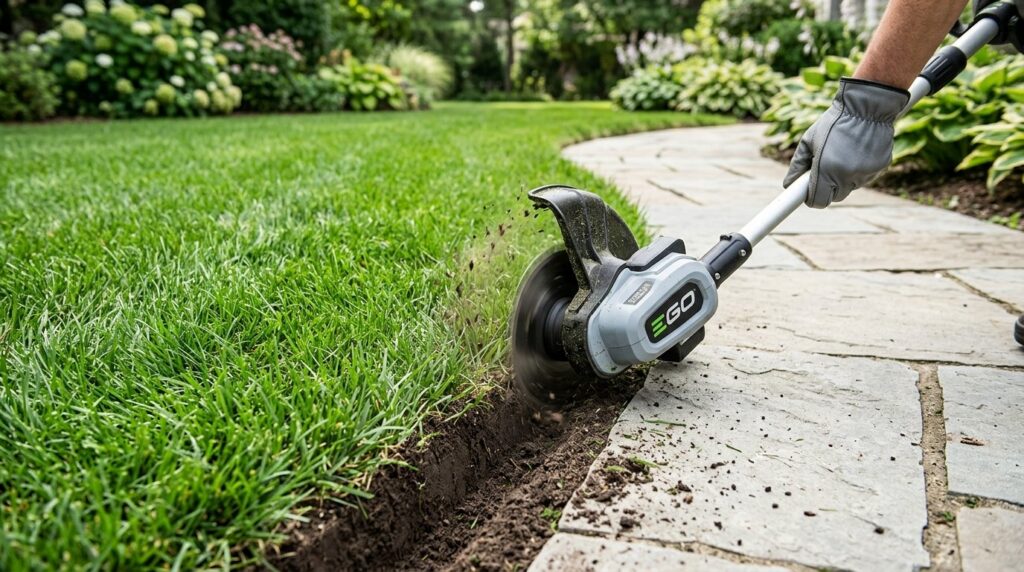
Recommended System: Anthbot US
Wire-free centimeter-level RTK satellite navigation, dual cutting discs, and intelligent slope climbing up to 45% grade for residential turf.
Affiliate disclosure: We may earn a commission from partner links (for example Anthbot) at no extra cost to you. Editorial opinions stay independent. Read our affiliate disclosure where published.
What a home lawn actually needs
A useful lawn does not have to look like a golf green. It has to cover the soil, tolerate the way the household uses it, recover from routine stress, and fit the amount of time and water available. The strongest maintenance plan therefore starts with function. A sunny play area, a shaded side yard, a drought-prone front slope, and a low-traffic display lawn should not receive identical care.
Grass plants need light, air, water, nutrients, and enough leaf surface to power root growth. Most homeowner problems appear when one of those inputs is out of balance. Cutting too short removes energy-producing leaf tissue. Frequent shallow watering keeps roots near the surface. Compacted soil limits air and infiltration. Heavy shade makes turf thin, which leaves openings for weeds. Before buying a treatment, identify which limiting condition is most likely.
Use observation as your first tool. Walk the lawn once a week during active growth. Look for tire ruts, scalped high spots, torn leaf tips, footprints that remain visible, areas where water runs off, and weeds that repeat in the same soil condition. A five-minute inspection catches small issues before they become a renovation.
Cool-season vs. warm-season grass in plain language
Cool-season grasses grow most strongly when air and soil are moderate. Kentucky bluegrass, perennial ryegrass, and fescues are common examples. They often grow well in spring and fall, slow during summer heat, and may turn tan while dormant in drought. Early fall is usually the most forgiving repair window because warm soil supports germination while cooler air reduces water stress.
Warm-season grasses such as bermudagrass, zoysiagrass, centipedegrass, and St. Augustinegrass wake later, thrive in summer heat, and become dormant after cool weather arrives. Their best establishment and major repair period is normally late spring into early summer, when active growth can fill damaged areas. A fall seeding schedule written for a northern fescue lawn does not automatically fit a southern bermudagrass lawn.
If you cannot identify the exact cultivar, start with the growth pattern and broad region. Does the lawn green early and struggle in midsummer, or stay brown in spring before racing in heat? Does it spread by visible runners, form bunches, or knit together below the surface? A local cooperative extension office can confirm common grasses and recommended timing without requiring a product purchase.
Mowing height and the one-third rule
| Lawn type | Useful homeowner range | Seasonal note |
|---|---|---|
| Tall fescue | About 3–4 inches | Keep toward the higher end during heat and shade. |
| Kentucky bluegrass | About 2.5–3.5 inches | Avoid a sudden short cut after missed mowing. |
| Perennial ryegrass | About 2–3 inches | Sharp blades reduce frayed, pale tips. |
| Fine fescue | About 2.5–4 inches | Often performs best with less aggressive mowing. |
| Bermudagrass | About 1–2 inches with suitable equipment | Do not force a low cut with an uneven rotary setup. |
| Zoysiagrass | About 1–2.5 inches | Match height to cultivar and mower quality. |
| St. Augustinegrass | About 2.5–4 inches | Higher settings help maintain leaf area. |
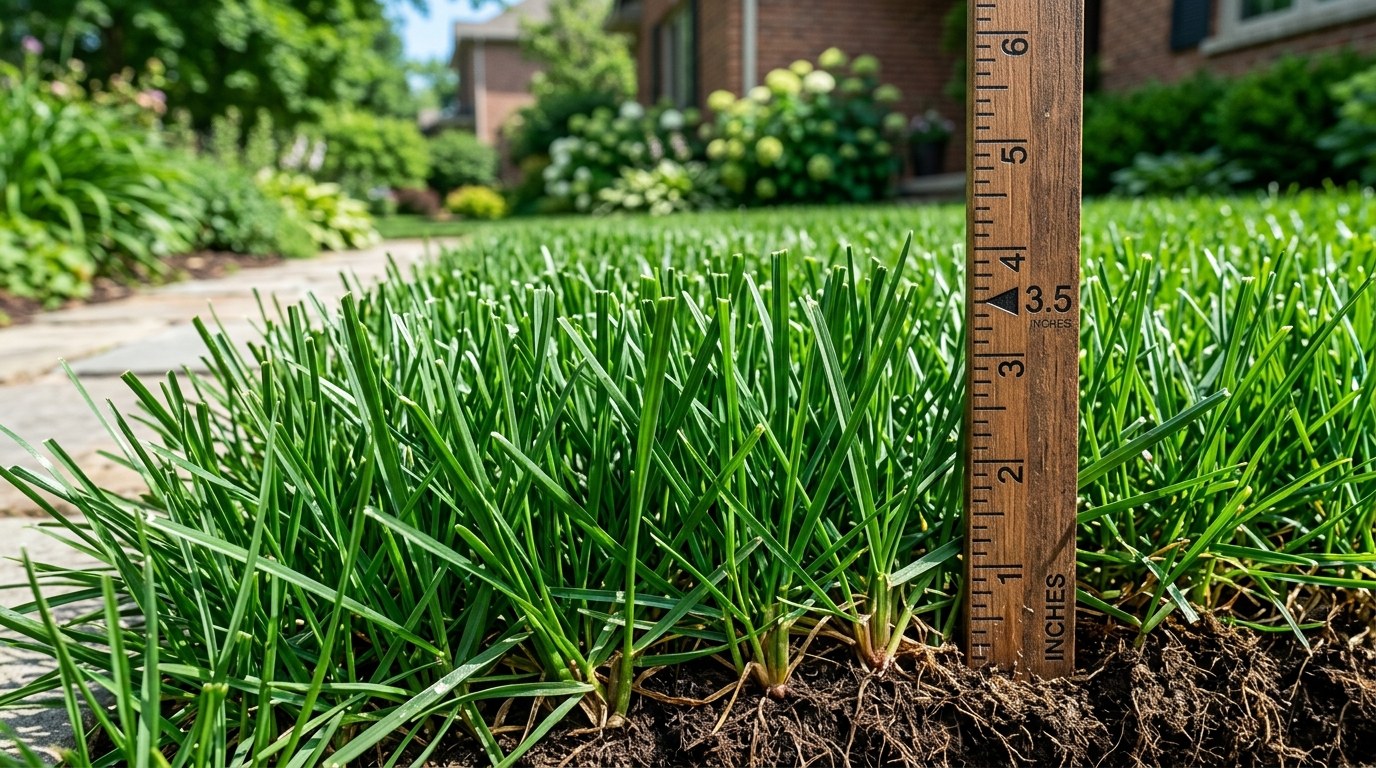
These are planning ranges, not a substitute for local cultivar guidance. The mower manual and local extension recommendations should decide the final setting. Measure the grass after mowing rather than trusting the numbers printed beside a mower lever; wheel size, deck design, wear, and uneven ground can make the real height different.
The one-third rule means avoiding removal of more than roughly one-third of the green blade in a single mowing. If the target height is 3 inches, try to mow before growth substantially exceeds about 4.5 inches. When a vacation or rainy week leaves grass very tall, raise the deck, remove a modest amount, then return a few days later. One severe cut exposes stems, produces clumps, and reduces root support exactly when the plant needs energy to recover.
A lawn-care schedule that adjusts to growth
A calendar can remind you to inspect, but growth should trigger the work. In fast spring growth, mowing may be needed more than once a week. During drought dormancy, there may be nothing useful to cut. Watering depends on rainfall and soil moisture. Fertilizer timing depends on grass type, soil results, and local nutrient rules. The best schedule is a decision loop: inspect, measure, act only when the condition calls for it, and record what happened.
- Inspect before mowing. Remove branches, stones, toys, wire, and other objects. Look for wet soil, new seedlings, wildlife, and damaged areas that should be skipped.
- Measure height and moisture. Check several representative spots. If grass is wet enough to clump or the soil is soft enough to rut, wait.
- Mow with a sharp, balanced blade. Alternate direction when practical and avoid repeated tight turns on stressed turf.
- Review the cut. Frayed pale tips point to a dull blade. Scalped arcs point to low settings, uneven ground, or bouncing deck height.
- Adjust the next job. Change frequency, not just height, so the next mowing removes a manageable amount.
Repair bare spots by fixing the cause first
Seed is not a diagnosis. A bare patch can come from traffic, pet urine, shade, standing water, construction debris, compacted soil, mower scalping, grubs, disease, or a failed sprinkler pattern. Seed spread over the same unchanged condition may germinate and disappear. Start by looking at shape and context: a narrow path suggests traffic, a low basin suggests drainage, crisp circular spots may relate to localized injury, and thinning under a tree points toward light and root competition.
For a small repair, remove loose dead material, loosen the upper soil without damaging buried utilities or tree roots, correct the grade or compaction that is practical to correct, and choose seed or sod suited to the light and region. Seed must contact soil. A thin cover can help retain moisture, but burying seed deeply slows or prevents emergence. Keep the seedbed evenly moist during germination, then transition toward deeper watering as roots establish.
Large repeating failures justify a different use. A heavily shaded route may perform better as mulch, a path, or a shade-tolerant ground layer rather than chronically weak grass. A drainage swale should continue carrying water instead of being filled to create a flat lawn. Good lawn care sometimes means reducing turf where the site cannot support it responsibly.
Watering and feeding without forcing growth
Established turf generally develops better drought tolerance when water reaches deeper soil and the surface is allowed to dry between sessions. Daily light watering can keep roots shallow and extend leaf wetness. New seed, new sod, sandy soil, compacted soil, steep slopes, and extreme heat require different handling, so there is no universal “every Tuesday” answer. Use a straight-sided container to see what sprinklers actually deliver, and use a screwdriver or soil probe to compare moist depth across zones.
Fertilizer should support growth the plant can use, not create a surge that demands more mowing and water. A soil test can identify pH or nutrient constraints and prevent guesswork. Sweep granules from pavement, keep products away from drains and water, and follow local restrictions and the label. More is not better. Excess nitrogen can make some lawns tender, increase disease pressure, and move off-site.
Leave short, dry clippings on the lawn when they disperse evenly. They break down and return nutrients without creating thatch by themselves. Bag clippings when mowing has been delayed enough to form heavy rows, when leaves are diseased, or when mature weed seed would be spread. Read the mulching vs. bagging guide for the exceptions.
Common lawn-care mistakes
- Mowing shorter to mow less often. The lawn loses leaf area and may expose soil, while growth rate does not conveniently slow on command.
- Watering by the clock alone. Irrigation continues after rain or misses the areas where compacted soil sheds water.
- Treating every brown patch as drought. Extra water can worsen drainage and disease problems.
- Using a weed product before identification. The treatment may miss the target or damage desirable grass.
- Ignoring blade condition. A dull or damaged blade can make the entire lawn look dry even when soil moisture is adequate.
- Renovating at the wrong growth stage. Seedlings face heat, cold, or competition before they can establish.
Build the next season into this one
Each season should leave the lawn better prepared for the next. Summer mowing height preserves leaf area for heat. Late-summer inspection reveals irrigation gaps before fall repair. Fall leaf management protects light and airflow. Clean winter storage makes the mower ready for spring. This continuity is more effective than a dramatic annual reset.
For the next practical step, set and verify your summer mowing height, learn how often your lawn needs water, and use the fall lawn care plan when temperatures begin to moderate. The yard tools hub explains the small set of equipment that supports these jobs.
Cons / limitations
Product-specific limitations for this job — not a generic “UI changes weekly” list:
- Seed as a personality trait: Bare spots from buried concrete, dog routes, or 4-hour shade will eat seed every spring. Change the use or the plant.
- Weekly mowing as a religion: Spring may need two cuts; August dormancy may need zero. The calendar is a reminder to look, not a contract.
- Fertilizer without a height or water plan: N makes leaf you cannot support. That is how you get disease and a bigger mowing bill.
Desk metrics (11 September 2026)
Desk method and documented ranges. We did not invent a Foxy Gardens test plot, yield, or timed field trial.
- USDA zone: Identify cool-season (often USDA 3–7) vs warm-season (often USDA 7–10 overlap). Desk USDA Plant Hardiness Map, 11 September 2026.
- Soil pH: Most home turf 6.0–7.0 pH. Color kit is the method; we did not send cores out.
- Fertilizer dose: Plan splits totaling a documented local range, typically about 0.7–1.0 lb N per 1,000 sq ft per application. 25 min to read one bag and one extension bulletin. No plot.
- Desk duration: 18 min structured re-read of public USDA zone guidance, a soil pH kit procedure, and the fertilizer label math above.
Always disconnect main power sources—remove battery packs or unplug cords—before inspecting mower blades, clearing aeration tines, or handling sharp garden equipment. Keep hydroponic nutrient concentrates stored securely.
Practical guides curated by horticultural practitioners and yard care enthusiasts. Field-tested methods, verifiable steps, and zero automated fluff.
Frequently asked questions
Should I mow a lawn on a fixed weekly schedule?
No. Mow when growth exceeds the target height and avoid removing more than about one-third at once.
When should I repair bare spots?
Match repair to the grass growth season and fix traffic, shade, compaction, or drainage first.