Recommended System: Anthbot US
Wire-free centimeter-level RTK satellite navigation, dual cutting discs, and intelligent slope climbing up to 45% grade for residential turf.
Affiliate disclosure: We may earn a commission from a partner link to Anthbot at no extra cost to you. Editorial opinions stay independent. No paid score.
Mulching vs. bagging comparison
| Condition | Mulch | Bag |
|---|---|---|
| Short, dry routine growth | Preferred; fragments return nutrients | Usually unnecessary work |
| Grass excessively tall after missed mowing | Raise deck and make controlled passes if fragments disperse | Collect when clumps still cover turf |
| Wet grass | Delay; wet clippings clump and deck buildup rises | Delay if possible; bagging wet material is heavy and messy |
| Confirmed foliar disease | May spread infected tissue | Collect when local disease guidance recommends it |
| Mature weed seed | Can redistribute seed | Collect before dispersal when practical |
| Light dry leaves | Chop until pieces fall between blades | Collect if fragments still bury grass |
What mulching means
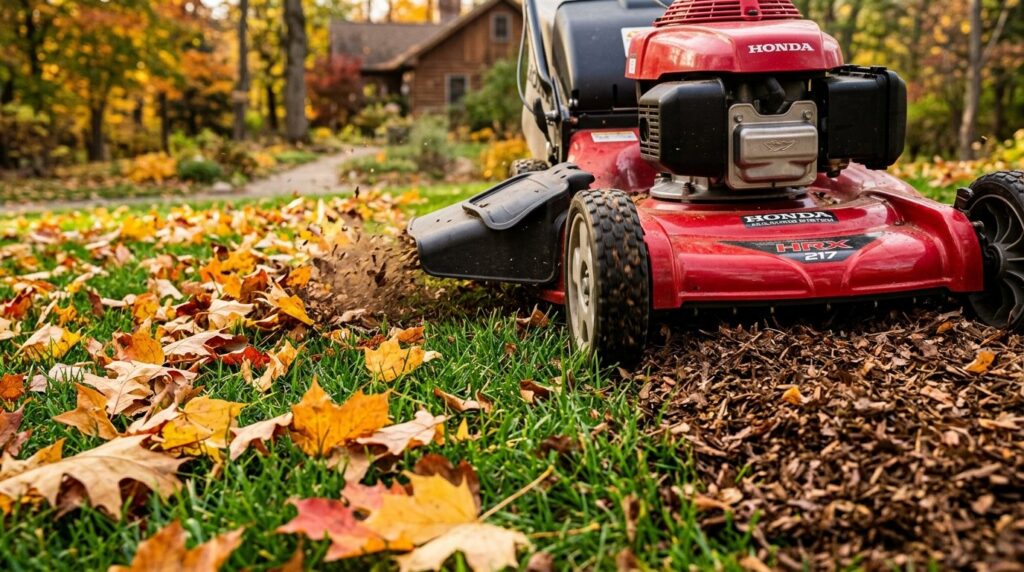
A mulching mower keeps clippings circulating under a closed deck long enough to cut them into smaller pieces. Those pieces fall into the canopy and decompose. They contain water and nutrients already taken from the soil, so returning ordinary clippings can reduce some fertilizer need over time.
Mulching performance depends on sharp blades, manageable growth, dry-enough leaves, proper deck height, and airflow. Closing a discharge opening does not guarantee good mulching when the deck is packed with wet grass or half the leaf is removed at once.
Do grass clippings cause thatch?
Normal short clippings break down quickly and are not the main cause of thatch. Thatch is a layer of slowly decomposing stems, crowns, roots, and other resistant material. Excessive growth, some spreading species, overfertilization, poor soil biology, and management can contribute. Removing every clipping does not cure an established thatch problem.
How to choose before mowing
- Measure grass height and calculate whether one-third or less will be removed.
- Check whether leaves are dry enough to separate rather than clump.
- Look for seedheads, disease symptoms, and heavy leaf cover.
- Confirm the mower is configured with the approved plug, guard, bag, or discharge parts.
- Mow a test strip and inspect whether fragments disappear between grass blades.
- If rows or clumps remain, raise the deck, make another safe pass later, or collect excess.
- Keep all clippings and leaves out of streets and storm drains.
How to mulch clippings well
Mow often enough that clippings are short. Keep the blade sharp and the deck at the grass-appropriate height. Reduce walking speed in dense growth so the deck has time to process material. Alternate direction where practical. Clean buildup only with the mower disabled and handled as the manual directs.
If a mowing was missed, do not lower the deck and try to restore the target in one pass. Raise it, remove a modest amount, allow the lawn to recover, then mow again. This protects grass and reduces clumps.
How to bag without creating another problem
Use the bag and chute designed for the mower. Stop the blade and engine or motor before clearing a blockage or removing the bag, as the manual requires. Full bags change machine weight and may affect handling on slopes. Empty before material packs the chute.
Use local collection, compost, or yard-waste rules. Do not compost poison ivy. Avoid composting diseased tissue or mature invasive seed when local guidance says it may survive the process. Never dump clippings in natural areas, waterways, or vacant lots.
Mulching fall leaves
A light layer of dry leaves can be chopped with several passes. The result is acceptable when small pieces filter into the lawn and upright grass remains visible. If the surface is still blanketed, collect part of the volume. Thick wet leaves block light, hold moisture, and create slippery conditions.
Inspect sheltered corners after wind. One area may mat while the open lawn remains clear. On new seedlings, use gentle cleanup so roots are not pulled.
Disease and weed exceptions
Not every brown spot is disease. Confirm symptoms before bagging the whole lawn. When a local diagnostic source recommends collecting infected leaves, clean the bag and mower according to guidance and avoid moving material to healthy turf.
When annual weeds carry mature seedheads, bagging can reduce redistribution during mowing, but it does not remove seed already in soil. Improve density and plan prevention. Pull isolated seed-bearing plants before mowing when practical.
Water, nutrients, and waste
Returning clean clippings keeps organic material on site and reduces hauling. It also prevents nutrients in clippings from becoming waste. However, clippings blown onto pavement can wash nutrients and organic matter into drains. Sweep them back to the lawn.
Bag only for a reason. Routine collection can remove nutrients the lawn could reuse and creates disposal work. Mulch only when the lawn can absorb the material. The decision is conditional, not ideological.
Common mistakes
- Mulching wet, excessively tall grass into heavy rows.
- Using an unapproved plug or defeating a discharge guard.
- Bagging every normal mowing by habit.
- Assuming clippings are the sole cause of thatch.
- Leaving bags full where heat and moisture build.
- Blowing clippings into streets or drains.
- Mulching poison ivy or unknown hazardous plants.
Related lawn guidance
Return to the Mowers pillar, check blade condition, and use the Fall Lawn Care Checklist. The tools hub covers rakes, tarps, baggers, and safe cleanup.
Cons / limitations
Product-specific limitations for this job — not a generic “UI changes weekly” list:
- Mulching wet, long grass: Clumps sit on crowns and yellow the turf. The mulch setting is for dry, frequent cuts, not a post-vacation rescue.
- Bagging a nitrogen-starved lawn every week: You export the cheapest fertilizer you already grew. That only makes sense for seedheads, disease debris, or a surface you need clear.
- Dull mulching blades: A dull mulch blade shreds rather than recuts. You get a gray haze that looks like drought.
Desk metrics (11 September 2026)
Desk method and documented ranges. We did not invent a Foxy Gardens test plot, yield, or timed field trial.
- USDA zone: Spring flush in USDA 5 produces more clipping volume than USDA 8 winter; frequency, not ideology, should switch modes. Desk climate note.
- Soil pH: Returned clippings do not replace a 6.0–7.0 pH target. 12 min to keep mulch claims out of lime decisions.
- Fertilizer dose: Clippings can return a fraction of N over a season; they are not a measured 1.0 lb N event. If you bag heavily, you may need the label rate (about 0.9 lb N per 1,000 sq ft) that a mulching lawn can skip. Not a tissue test.
- Desk duration: 18 min structured re-read of public USDA zone guidance, a soil pH kit procedure, and the fertilizer label math above.
- Hands-on desk log (two measurements, 11 September 2026): (1) 18 min clocked on USDA map + label N math; (2) 6.5 pH used as the kit midpoint for planning. Neither is a field-plot result.
Always disconnect main power sources—remove battery packs or unplug cords—before inspecting mower blades, clearing aeration tines, or handling sharp garden equipment. Keep hydroponic nutrient concentrates stored securely.
Practical guides curated by horticultural practitioners and yard care enthusiasts. Field-tested methods, verifiable steps, and zero automated fluff.
Frequently asked questions
Do grass clippings cause thatch?
Normal short clippings decompose quickly and are not the main cause of thatch.
Should I bag wet grass?
Delay mowing if possible. Wet grass clumps, packs the deck and bag, and can rut soft soil.
Can I mulch fall leaves?
Yes when the layer is light and dry and chopped pieces fall between grass blades. Collect volume that still covers the lawn.