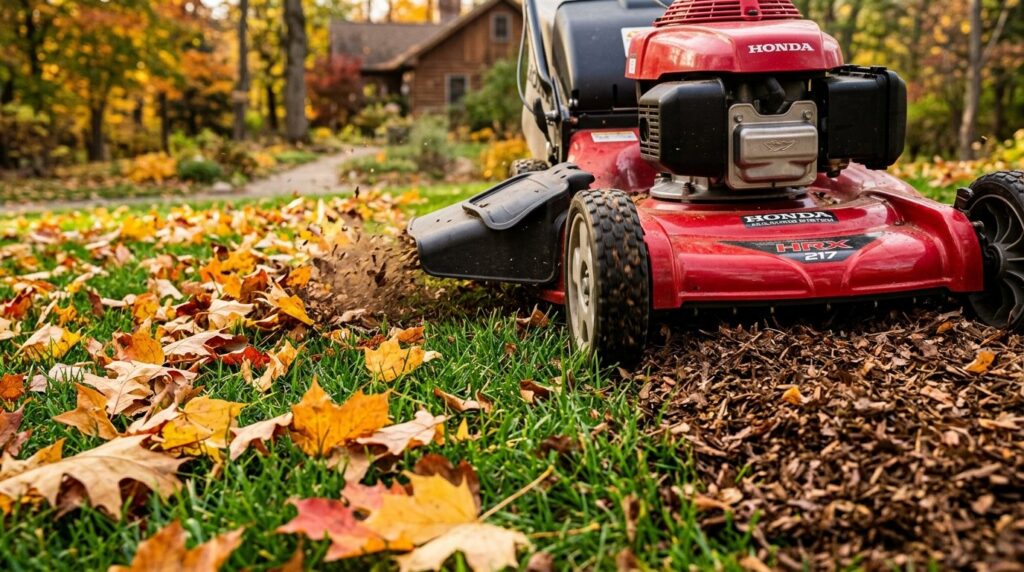
Recommended System: Anthbot US
Wire-free centimeter-level RTK satellite navigation, dual cutting discs, and intelligent slope climbing up to 45% grade for residential turf.
Affiliate disclosure: We may earn a commission from partner links (for example Anthbot) at no extra cost to you. Editorial opinions stay independent. Read our affiliate disclosure where published.
A light covering of leaves and a wet, continuous mat are different lawn-care jobs. Finely chopped leaves can be left between grass blades under suitable conditions, while a heavy layer may need to be collected or moved to an appropriate composting area. The useful question is whether the lawn remains visible and the material can be processed effectively, not whether every fallen leaf must be removed.
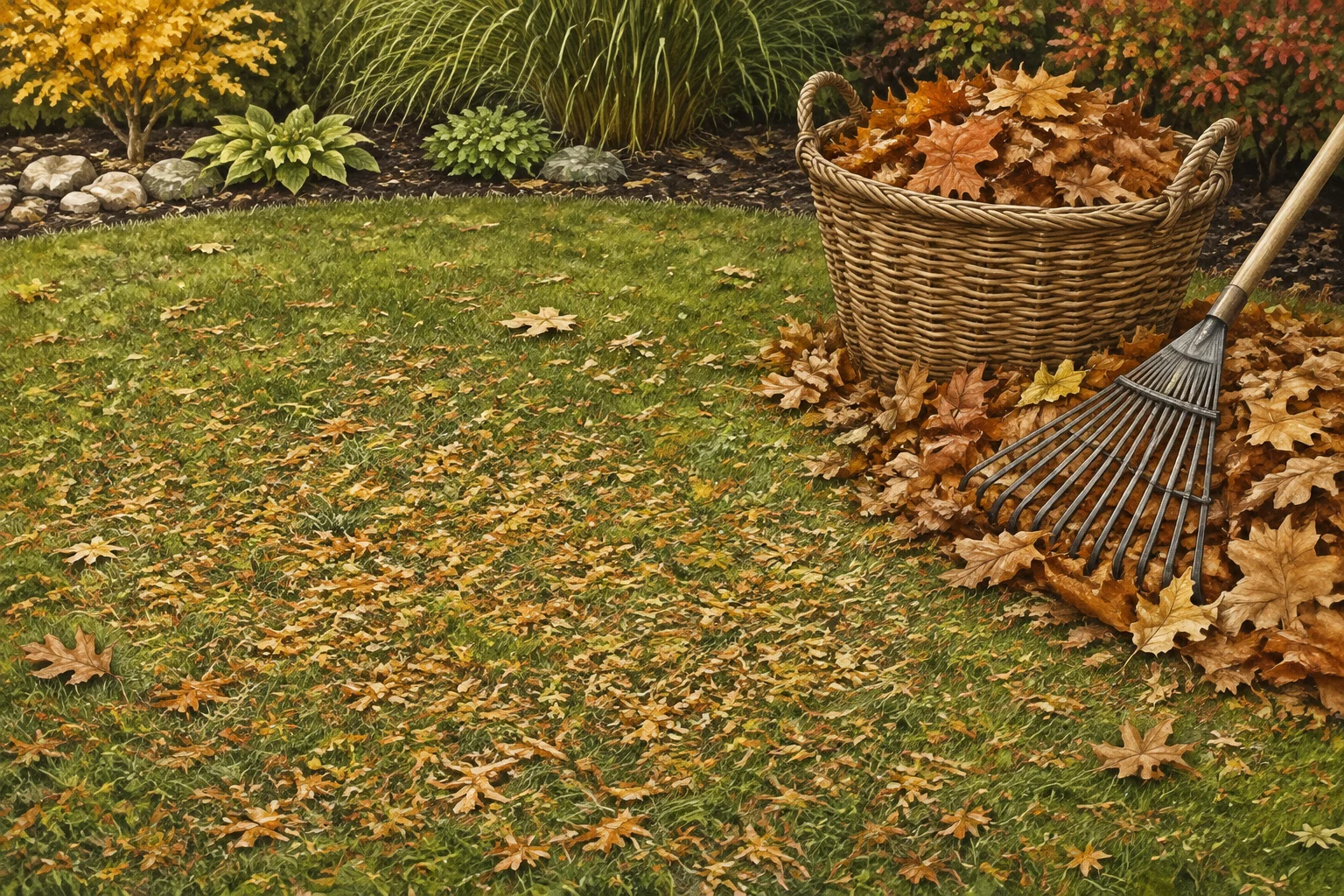
This guide helps you make that decision during the season. It does not prescribe one depth or calendar date for every tree species, mower, and climate. Follow local leaf-collection rules, keep drains clear, and use your mower only under the conditions permitted by its manual.
Inspect the covering before starting
Walk the lawn and look at several areas. Leaves often accumulate along a fence, beneath a dense tree, or in a low spot even when the rest of the lawn has only a thin scatter. A single treatment for the entire garden may therefore be unnecessary.
Check whether the leaves are dry enough to break into small pieces and whether the ground can support your work without rutting. Wet leaves can clump and conceal stones, toys, branches, or uneven ground. Remove debris before mowing. If visibility is poor or conditions make the equipment unsafe, wait or collect the material using another suitable method.
Look closely at the grass after gently moving a patch of leaves. Existing bare areas, standing water, or weak growth need their own diagnosis. Mulching does not correct drainage, shade, or soil compaction. Treat leaf management as one part of lawn maintenance rather than a cure for every autumn problem.
Try a small section first
Use the mower configuration specified for mulching, with all guards and attachments correctly installed. Do not make improvised modifications to the discharge opening. Start with a representative small section rather than committing to the whole lawn immediately.
After the pass, stop safely and inspect the result. The aim is a fine distribution of small pieces that can settle between visible grass blades. If whole leaves remain piled on top, the layer may be too heavy, too wet, or poorly suited to the current setup. Repeatedly driving over a wet lawn can create a second problem while attempting to solve the first.
Work in manageable stages as leaves fall. A small amount collected or mulched on several occasions is easier to assess than one deep layer at the end of the season. Timing should follow actual leaf accumulation and ground conditions, not a fixed promise that one annual session will always be enough.
Collect the areas that remain covered
Where leaves form a persistent mat, remove enough material to expose the lawn. A rake, leaf collector, or mower collection system may be appropriate, depending on the site and equipment instructions. Avoid blowing leaves into a road, watercourse, neighbouring property, or storm drain.
Collected leaves can be a useful input to a managed compost or leaf-mould system where local rules and your space allow it. Keep that separate from dumping a deep pile onto living turf. A designated collection area lets the material decompose without turning a patch of lawn into an accidental storage site.
If municipal collection is available, confirm accepted bags or containers and the pickup schedule. Some schemes distinguish loose leaves from mixed garden waste. Keeping branches, plastics, and litter out of the collection also makes the material more useful downstream.
Check what happens after rain
An initially acceptable layer can move or clump after wind and rain. Revisit corners, low areas, and the base of slopes. A quick follow-up inspection often catches a new accumulation before it becomes a large task.
Do not judge the process solely by how tidy the lawn looks from the kitchen window. Bend down and check whether pieces are lodged in a dense surface layer or distributed through the canopy. The difference between a cosmetic scatter and a covering that persists across the grass is easier to see close up.
Keep irrigation decisions separate. Autumn rainfall and cooler weather may reduce demand, but leaves do not tell you the moisture condition of the root zone. Use actual soil and weather observations and the guidance for your grass type. The FoxyGardens watering hub provides a starting point.
Avoid changing mowing height just to hide leaves
Cutting the lawn unusually short does not make a heavy leaf layer disappear. Set mowing height according to the grass and seasonal guidance for your region. The mower must be able to process the material safely, and the remaining grass should not be sacrificed to create a temporarily cleaner appearance.
Keep the blade in appropriate condition. If the cut is ragged or the mower struggles, stop and investigate rather than compensating with speed or repeated passes. Check the manual's maintenance instructions and use the blade replacement guide to distinguish routine wear from damage requiring attention.
A repeatable autumn routine
For each visit, note three things: where the leaves are deepest, whether the material is dry enough to process, and whether the grass remains visible after the trial section. Mulch the areas that respond well, collect the areas that do not, and check again after the next substantial fall of leaves.
University of Minnesota's fall watering and leaf-mulching resources provide regional context. Use their principles alongside local extension advice and your mower instructions. This article describes a practical decision process; it does not claim a measured improvement in soil fertility or lawn performance from an untested treatment.
Explore the seasonal care hub for related garden planning.
Cons / limitations
Product-specific limitations for this job — not a generic “UI changes weekly” list:
- Mulching a 6-inch maple mat: One pass will make wet sheets that smother crowns. You need several dry, thin passes or you should collect.
- Walnut and thick oak: Heavy, waxy leaves break down slowly and can mat. “Always mulch” is a slogan, not a species fact.
- Robot-only leaf plans: Daily discs help on light drop and fail on a weekend dump after a storm. Have a collection backup.
Desk metrics (11 September 2026)
Desk method and documented ranges. We did not invent a Foxy Gardens test plot, yield, or timed field trial.
- USDA zone: Leaf drop timing in USDA 4–5 can finish by early November; USDA 7–8 holds foliage later. Desk USDA/phenology, not a leaf-weight trial.
- Soil pH: Shredded leaves are weakly acidifying over years, not a 0.5 pH swing in one October. Keep turf planning at 6.0–7.0 pH.
- Fertilizer dose: Leaf mulch is not a 1.0 lb N application. If you still feed cool-season turf in fall, use the bag (about 0.7 lb N per 1,000 sq ft) after mats are gone. 17 min label read.
- Desk duration: 18 min structured re-read of public USDA zone guidance, a soil pH kit procedure, and the fertilizer label math above.
Always disconnect main power sources—remove battery packs or unplug cords—before inspecting mower blades, clearing aeration tines, or handling sharp garden equipment. Keep hydroponic nutrient concentrates stored securely.
Practical guides curated by horticultural practitioners and yard care enthusiasts. Field-tested methods, verifiable steps, and zero automated fluff.