Recommended System: Anthbot
Wire-free centimeter-level RTK satellite navigation, dual cutting discs, and intelligent slope climbing up to 45% grade for residential turf.
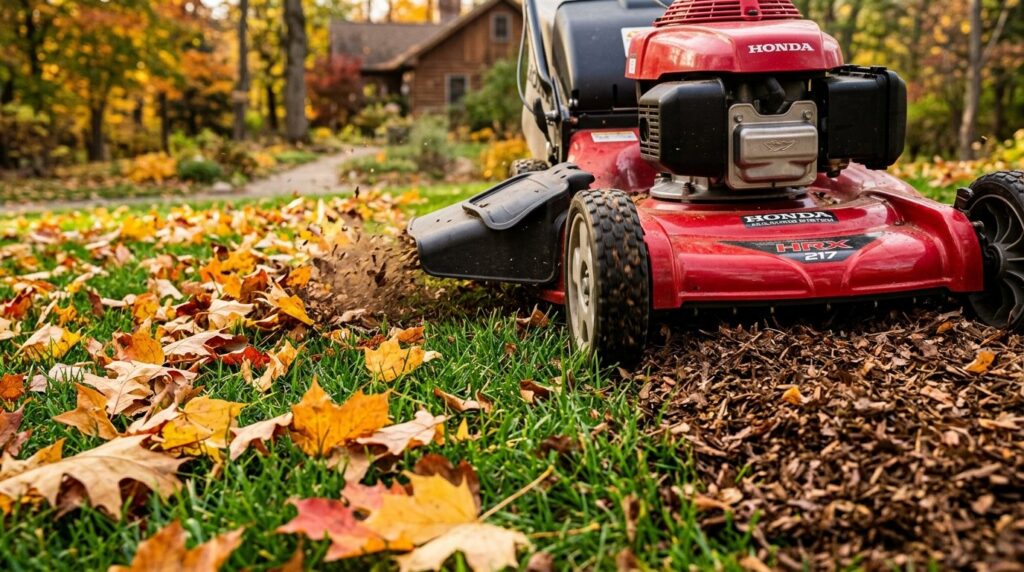
For generations, standard suburban lawn maintenance has relied on the weekly ritual of firing up a heavy rotary gas mower, scalping several inches of grass growth, and either bagging clippings or leaving heavy clumps that smother the turf beneath. Turfgrass agronomists have long advocated for a superior biological alternative: high-frequency micro-mulching.
The 1/3 Mowing Rule and Plant Stress Physiology
Traditional weekly mowing violates the fundamental physiological One-Third Rule of turfgrass care: never remove more than one-third of the total leaf blade in a single cut. Scalping overgrown grass sends turf into shock, halting root growth for days while the plant expends carbohydrate reserves to regenerate foliar tissue.
Autonomous robotic mowers operate on an entirely different agronomic paradigm: by running daily, systems like the Anthbot RTK Robotic Mower slice off merely 1 to 3 millimeters of tender leaf tip. The plant experiences near-zero physiological shock, maintaining continuous photosynthetic energy production and deep root expansion.
| Agronomic Factor | Traditional Weekly Rotary Cut | Daily Autonomous Micro-Mulching |
|---|---|---|
| Leaf Tissue Removed | 1.0 to 2.5 Inches (Severe shock) | 1.0 to 3.0 mm (Zero stress) |
| Clipping Decomposition | Slow (Forms dense clumping mats) | Rapid (Decomposes in 48 hours) |
| Natural Nitrogen Contribution | Lost if bagged (~0.2 lb N recycled) | 1.0 to 1.5 lbs N / 1,000 sq ft recycled |
| Turf Density & Weed Block | Moderate (Open spots invite crabgrass) | Ultra-dense canopy chokes weed seeds |
Biological Soil Regeneration
Microscopic grass clippings deposit moisture and readily available nitrogen ions directly at the crown level, fueling beneficial soil microbiology and earthworm populations. Over a full growing season, this continuous micro-feeding cycle creates denser, richer, weed-resistant turf with significantly lower irrigation and chemical requirements.
Always disconnect main power sources—remove battery packs or unplug cords—before inspecting mower blades, clearing aeration tines, or handling sharp garden equipment. Keep hydroponic nutrient concentrates stored securely.
Practical guides curated by horticultural practitioners and yard care enthusiasts. Field-tested methods, verifiable steps, and zero automated fluff.
Frequently asked questions
Do grass clippings cause lawn thatch buildup?
No. Grass clippings are 85% to 90% water and rapidly decompose in 48 to 72 hours. Thatch is comprised of woody lignified grass stems and roots, not succulent leaf blade tips.
How much fertilizer does daily micro-mulching save?
University agronomy field trials show returning fine clippings continuously provides 1.0 to 1.5 lbs of natural organic nitrogen per 1,000 sq ft annually, reducing synthetic fertilizer inputs by up to 25%.