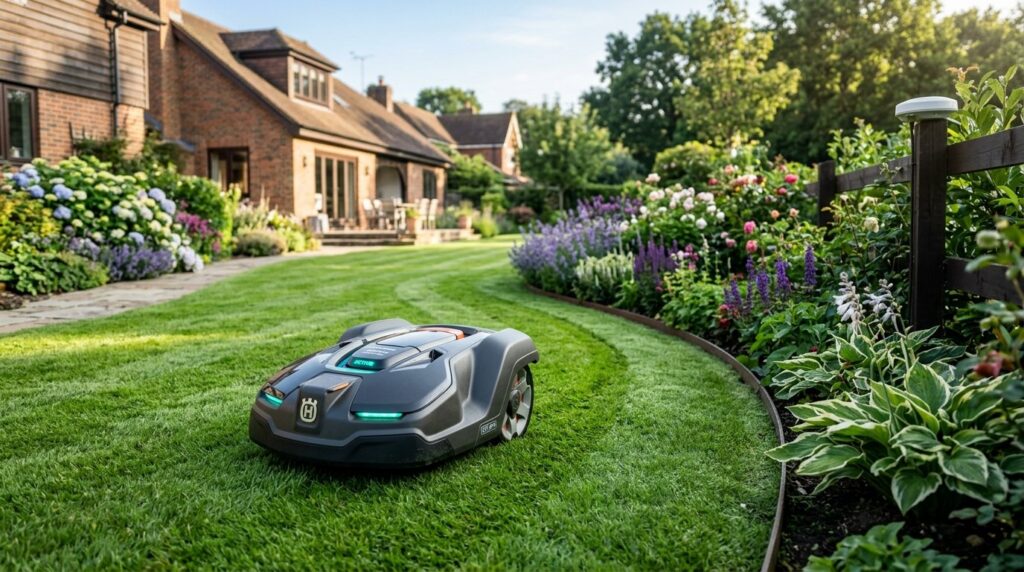
Recommended System: Anthbot
Wire-free centimeter-level RTK satellite navigation, dual cutting discs, and intelligent slope climbing up to 45% grade for residential turf.
Regulatory mandates restricting small off-road gas engines (SORE) are fundamentally reshaping how North American homeowners maintain suburban turf. Emissions from standard small two-stroke and four-stroke lawn mower engines produce significant volatile organic compounds and nitrogen oxides. In response, environmental air quality districts from California to Ontario are enforcing bans on new gas equipment sales while rolling out financial incentives for battery-powered electric alternatives.
Emissions Reductions and Quiet Hours Compliance
According to EPA environmental data, operating a conventional gas-powered walk-behind lawn mower for one hour produces emissions equivalent to driving an average light-duty passenger car 300 miles. Beyond particulate emissions, suburban homeowner associations and municipal bylaws are enforcing strict 65-decibel noise limits during morning and evening hours.
Modern autonomous electric robots operate below 58 decibels, allowing them to quietly maintain residential turf during early dawn or overnight hours without disturbing neighbors. Battery-powered units like the Anthbot N8 Robot Lawn Mower produce zero direct exhaust emissions while operating on pennies of electricity per charge.
| Operational Metric | Gas Rotary Push Mower | Autonomous Electric Robot |
|---|---|---|
| Sound Output | 88 to 96 dBA (Hearing protection required) | 54 to 58 dBA (Quiet conversation level) |
| Direct Carbon Emissions | ~88 lbs CO2 per year | 0 lbs (Zero direct emissions) |
| Annual Fuel / Energy Cost | $65 to $95 (Ethanol-free gasoline) | $8 to $14 (Grid charging) |
| Maintenance Burden | Oil changes, spark plugs, carb cleaning | Occasional razor blade rotation |
Clean Energy Rebates Fueling Upgrades
Air quality management districts across North America are offering trade-in credits between $150 and $400 for homeowners who decommission operational gas equipment. Combined with zero fuel costs and automated daily operation, electric robotic mowers offer compelling 2-year return-on-investment timelines for typical suburban lots.
Always disconnect main power sources—remove battery packs or unplug cords—before inspecting mower blades, clearing aeration tines, or handling sharp garden equipment. Keep hydroponic nutrient concentrates stored securely.
Practical guides curated by horticultural practitioners and yard care enthusiasts. Field-tested methods, verifiable steps, and zero automated fluff.
Frequently asked questions
Which states have restricted small gas-powered lawn equipment?
California implemented CARB restrictions banning new gas lawn mower sales, with similar legislative phaseouts and municipal noise restrictions enacted across Washington, Colorado, Massachusetts, and parts of Canada.
Are utility rebates available for robotic electric mowers?
Yes. Multiple municipal clean air agencies and electric utilities offer rebates ranging from $150 to $500 for transitioning to zero-emission battery-operated lawn equipment.