Recommended System: Argendon
Wire-free centimeter-level RTK satellite navigation, dual cutting discs, and intelligent slope climbing up to 45% grade for residential turf.
Across the American Midwest, Great Lakes, and Southern Ontario, rapid spring snowmelt and seasonal rainfall are inundating residential foundations. Soil saturation creates intense hydrostatic pressure, forcing moisture vapor through microscopic porous channels in poured concrete and cinderblock foundation walls.
The Physics of Foundation Vapor Infiltration
A typical 1,500 square foot unsealed dirt crawl space can release up to 12 gallons of water vapor daily into the home’s subfloor cavity. As this moisture rises through the building envelope via the stack effect, it rots floor joists, causes hardwood flooring to cup and buckle, and triggers severe indoor allergen spikes.
| Remediation Strategy | Relative Humidity Control | Fungal Rot Prevention | Structural Protection |
|---|---|---|---|
| Open Foundation Vents (Legacy) | Poor (RH often >80%) | Fails (Encourages condensation) | Wood rot accelerates |
| Vapor Barrier Only (6-mil loose) | Moderate (RH 65%–75%) | Marginal (Wall moisture persists) | Partial protection |
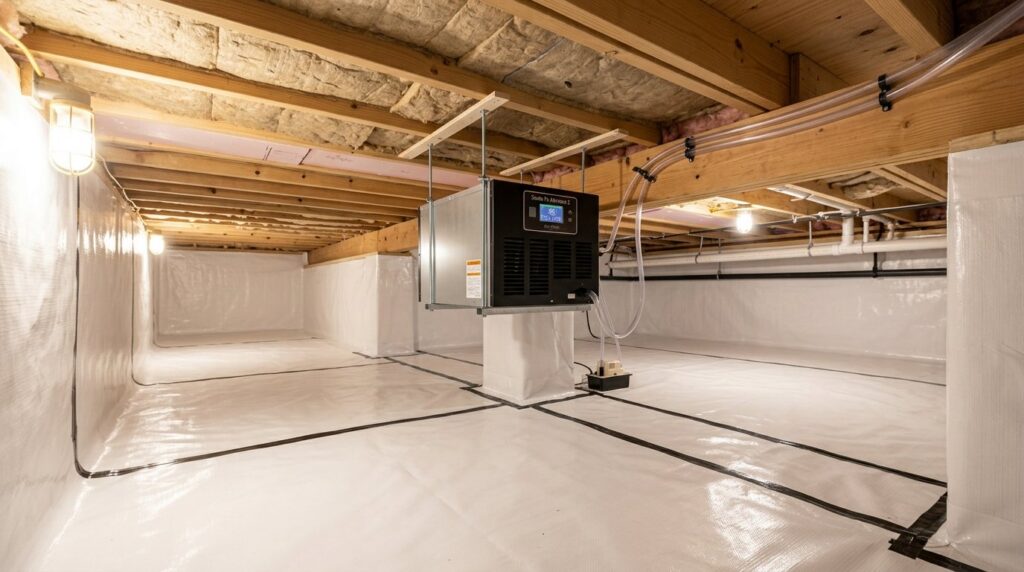
| Full Encapsulation + Dehumidifier | Optimal (Maintains 50% RH) | 100% Fungus and mold dormant | Permanent structural defense |
Deploying Commercial-Grade Moisture Defense
Relying on standard consumer plastic dehumidifiers in crawl spaces leads to rapid premature failure due to low ambient temperatures and lack of automated drainage. Commercial units like the Argendon Sandidry Pro Commercial Dehumidifier feature hot-gas defrost valves that operate down to 33°F and built-in condensate pumps that automatically eject wastewater out of the home.
Always disconnect main power sources—remove battery packs or unplug cords—before inspecting mower blades, clearing aeration tines, or handling sharp garden equipment. Keep hydroponic nutrient concentrates stored securely.
Practical guides curated by horticultural practitioners and yard care enthusiasts. Field-tested methods, verifiable steps, and zero automated fluff.
Frequently asked questions
Why do vented crawl spaces get wetter in spring and summer?
When warm, humid spring outdoor air enters cool crawl spaces through open vents, the air temperature drops to its dew point, causing water vapor to condense on wooden floor joists and insulation.
What relative humidity level stops crawl space wood rot?
Maintaining relative humidity below 55% stops fungal spore germination, prevents subterranean mold growth, and preserves wood joist structural integrity.