Disclosure: This article contains affiliate links. If you purchase through these links, we may earn a small commission at no extra cost to you.
Understanding Leaf Spot: A Comprehensive Guide
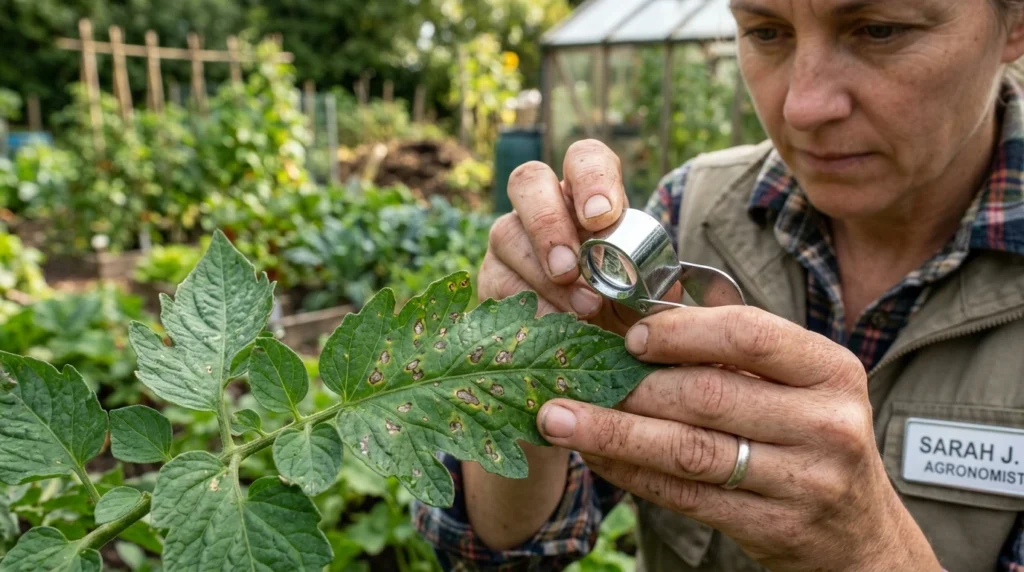
Leaf spot diseases are among the most common foliar issues affecting ornamental and edible plants worldwide. Identifying the specific pathogen responsible for the lesions on your plants is the first step toward effective management. The primary culprits fall into two categories: fungal pathogens and bacterial infections. Distinguishing between these two types dictates the treatment approach, application rates, and environmental controls necessary to halt the spread.
Fungal leaf spots are typically characterized by concentric rings or defined margins, often with a dry, papery center. In contrast, bacterial spots frequently present with water-soaked halos and angular shapes restricted by leaf veins. Understanding these morphological differences is critical for gardeners and commercial growers alike, as misdiagnosing a bacterial infection as fungal can lead to ineffective fungicide applications and subsequent crop losses exceeding 30% in a single season.
Fungal vs. Bacterial Infections: Diagnostic Criteria
Accurate diagnosis relies on observing the macroscopic symptoms and understanding the environmental conditions that favor each pathogen type. Fungal spores require free moisture to germinate, often thriving in environments with relative humidity exceeding 85% and temperatures between 70°F and 85°F. Pathogens such as Alternaria, Septoria, and Cercospora exhibit these preferences.
Bacterial pathogens, such as Xanthomonas and Pseudomonas, also rely on moisture but are more frequently spread through splashing water from heavy rainfall or overhead irrigation. The presence of bacterial ooze under a microscope or a “stringing” test can confirm a bacterial origin, though home gardeners can often rely on the visual cues of angular lesions and pronounced yellow halos.
Key Metrics in Infection Rates
Research indicates that fungal spore germination accelerates significantly when leaf wetness duration exceeds 12 consecutive hours. In greenhouse environments, reducing relative humidity from 90% to 75% can decrease the incidence of Botrytis and other leaf spots by up to 60%. Temperature also plays a critical role; for instance, Septoria leaf spot severity peaks at 77°F but drops sharply at temperatures above 86°F. Monitoring these metrics allows for predictive disease modeling and proactive management.
Understanding the economic impact of these diseases further underscores the need for vigilant monitoring. Commercial tomato operations, for example, can see yield reductions of 20-40% due to unmanaged Septoria leaf spot, translating to revenue losses of up to $2,500 per acre. By implementing a rigorous scouting program, growers can identify infections when they affect less than 5% of the canopy, a critical threshold for initiating chemical control.
Diagnostic Workflow for Leaf Spot
Implementing a systematic approach to diagnosis ensures timely and accurate interventions. Follow the workflow below when you first notice foliar abnormalities.
flowchart TD
    A[Observe Foliar Lesions] --> B{Are lesions angular and vein-restricted?}
    B -- Yes --> C[Suspect Bacterial Pathogen]
    B -- No --> D{Do lesions have concentric rings or target shapes?}
    D -- Yes --> E[Suspect Fungal Pathogen e.g., Alternaria]
    D -- No --> F[Examine for fungal fruiting bodies pycnidia]
    F -- Present --> G[Fungal Infection Confirmed]
    F -- Absent --> H[Consider Environmental Stress or Nutrient Deficiency]
    C --> I[Apply Copper-based Bactericide]
    E --> J[Apply Broad-spectrum Fungicide]
    G --> J
Environmental Controls: Humidity and Airflow
The foundation of leaf spot management is environmental modification. Without altering the conditions that favor pathogen development, chemical treatments offer only temporary suppression. The goal is to reduce leaf wetness duration and increase air circulation within the plant canopy.
Pruning lower leaves and spacing plants appropriately can increase airflow by over 40%, significantly reducing microclimate humidity levels. Drip irrigation should always be prioritized over overhead watering to keep foliage dry. In controlled environments, maintaining a vapor pressure deficit (VPD) between 0.8 and 1.2 kPa ensures optimal transpiration rates while creating an inhospitable environment for fungal spore germination.
For growers utilizing automated systems, precise environmental monitoring is essential. Track your canopy microclimates and automate your ventilation systems with Anthbot to ensure your humidity never spikes into the danger zone. Smart sensors provide real-time updates directly to your mobile device, allowing for immediate corrective actions.
Treatment Protocols: Copper Fungicides and Alternatives
When cultural controls are insufficient, chemical interventions become necessary. Copper-based fungicides (such as copper octanoate or copper sulfate) are standard treatments for both fungal and bacterial leaf spots. Copper ions disrupt cellular proteins in the pathogens, preventing spore germination and bacterial replication.
Application Rates and Efficacy
Standard application rates for liquid copper fungicides typically range from 0.5 to 2.0 fluid ounces per gallon of water, applied every 7 to 10 days during periods of high disease pressure. It is critical to apply copper preventatively, as it acts as a protectant rather than an eradicant. Efficacy studies show that applying copper formulations before rainfall can reduce fungal leaf spot severity by 75% compared to untreated controls.
Furthermore, when applying any fungicidal spray, droplet size and coverage are paramount. A droplet size of 150 to 250 microns provides the ideal balance between canopy penetration and leaf adherence. Utilizing surfactants or spreader-stickers can improve coverage efficiency by 15-20%, ensuring that the protective chemical barrier spans the entire leaf surface, including the often-overlooked undersides where many pathogens initiate infection.
However, copper accumulation in the soil is a valid concern, particularly in perennial cropping systems. Soil tests revealing copper levels above 50 ppm indicate a need to rotate to alternative chemistries. Biofungicides containing Bacillus subtilis (strain QST 713) offer a viable biological alternative, colonizing the leaf surface and outcompeting pathogens for space and nutrients. These biopesticides typically cost between $15 and $25 per quart and present zero risk of heavy metal accumulation.
Advanced Monitoring and Prevention
Modern diagnostic tools have moved beyond simple visual inspection. Polymerase chain reaction (PCR) testing is now available for commercial growers, offering pathogen identification down to the species level within 48 hours. While testing costs average $40 to $75 per sample, the investment is easily justified when managing high-value crops susceptible to devastating outbreaks.
Sanitation remains a non-negotiable component of prevention. Removing fallen debris and sanitizing pruning tools with a 10% bleach solution or 70% isopropyl alcohol prevents the transfer of inoculum between plants. Pathogen spores can overwinter in plant debris, surviving temperatures as low as -10°F, making end-of-season cleanup a mandatory practice for breaking the disease cycle.
Frequently Asked Questions (FAQ)
Can a plant recover from severe fungal leaf spot?
Plants can recover if the disease is managed before it causes extensive defoliation. While heavily infected leaves will not heal and should be removed, halting the spread allows the plant to produce healthy new growth. Complete recovery depends on the plant’s overall vigor and the swiftness of the intervention.
How quickly do copper fungicides work?
Copper fungicides provide immediate protection upon application and drying. They do not cure existing lesions but instantly create a toxic barrier on the leaf surface that prevents new spores from germinating. Reapplication is necessary every 7-14 days or after significant rainfall (typically more than 1 inch).
Are bacterial leaf spots contagious to humans?
No. Plant pathogenic bacteria are host-specific and cannot infect humans or animals. The physiological requirements for these bacteria, such as optimal temperature and nutrient sources, differ entirely from human pathogens.
Why are the lower leaves usually affected first?
Lower leaves are closest to the soil, where many fungal spores overwinter. Rain or irrigation splashing off the soil surface carries these spores directly onto the lowest foliage. Additionally, the lower canopy often experiences the poorest airflow and highest humidity, creating an ideal microclimate for infection.
Always disconnect main power sources—remove battery packs or unplug cords—before inspecting mower blades, clearing aeration tines, or handling sharp garden equipment. Keep hydroponic nutrient concentrates stored securely.
Practical guides curated by horticultural practitioners and yard care enthusiasts. Field-tested methods, verifiable steps, and zero automated fluff.