Affiliate Disclosure: This article contains partner links, including a SuperMoney comparison of personal loan offers for US residents. We may earn a commission at no extra cost to you when you buy or apply through them. Loan rates, amounts, fees and eligibility are set by each lender, not by FoxyGardens.
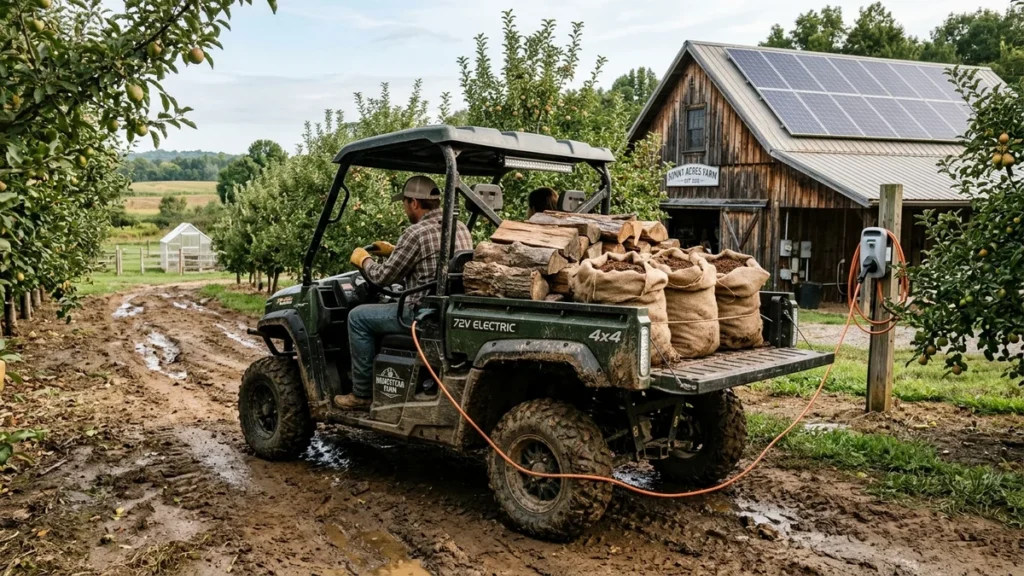
Across working orchards, equine pastures, nursery operations, and 5-to-50-acre rural homesteads, the traditional 500cc to 800cc gasoline utility terrain vehicle (UTV) is rapidly being replaced by 72V Lithium Iron Phosphate (LiFePO4) electric 4×4 UTVs and heavy-duty electric cargo trikes/carts. While gasoline side-by-sides excel at 50 mph desert trail riding, homestead utility hauling consists of stop-and-go low-speed duty cycles—towing 1,500-pound firewood trailers, dumping wet compost, checking perimeter fencing, and moving feed sacks inside enclosed barns where exhaust fumes and 84 dBA engine roar spook livestock. This 2026 agricultural engineering guide compares 72V AC-induction and Permanent Magnet Synchronous Motor (PMSM) electric UTV drivetrains against gasoline equivalents across zero-RPM torque, hill gradeability, regenerative braking, and off-grid solar barn charging.
Zero-RPM Torque Physics: 72V PMSM Electric vs. Gas CVT Belt Slip
The primary mechanical weak point of a gasoline utility vehicle used for heavy low-speed towing is its centrifugally engaged Continuously Variable Transmission (CVT) rubber drive belt. When a gas UTV attempts to inch forward up a muddy 25% orchard incline with 1,000 lbs of gravel in the dump bed, the engine must rev to 2,800 RPM before the clutch sheaves fully clamp the belt—generating intense friction heat that glazes and snaps $180 USD Kevlar belts prematurely.
- Instantaneous 100% Torque at 0 RPM: A 72V electric UTV powered by a 10 kW to 15 kW (20+ HP peak) Permanent Magnet Synchronous Motor (PMSM) delivers 100% of its peak rotational torque (typically 85 to 130 Nm at the motor shaft, multiplied 12:1 through a sealed helical gear reduction differential) the instant you press the accelerator pedal by 5 millimeters.
- Direct Gear Drive (Zero CVT Belts): Because electric motors spin smoothly from 0 to 6,500 RPM without stalling, 72V electric UTVs eliminate the centrifugal clutch and rubber belt entirely, coupling the motor directly to a sealed oil-bath two-speed transaxle (High/Low range) with mechanical park lock.
Traverseon Modular Gear Storage Cases
Weatherproof modular storage cases and mounting systems for trucks and outdoor gear. Measure your UTV cargo bed and tie-down points before ordering.
Check Traverseon Specs & Current PricingEngineering Benchmark: 72V LiFePO4 Electric UTV vs. 570cc Gas UTV
The table below models 5-year total cost of ownership (TCO), acoustic output, and hauling metrics for a typical 72V 105Ah (7.56 kWh) LiFePO4 electric UTV and a standard 570cc fuel-injected gasoline UTV, each operating 300 hours per year on a 15-acre property. The figures are planning ranges for this vehicle class, not a FoxyGardens field test; check the exact model’s specifications and your local fuel and electricity prices before relying on them:
| Homestead Hauling Metric | 72V LiFePO4 Electric UTV (10kW PMSM) | 570cc Gasoline EFI Utility Vehicle | Homestead Engineering Advantage |
|---|---|---|---|
| Cargo Dump Bed / Towing Rating | 800–1,000 lbs Bed / 1,500–2,000 lbs Tow | 800 lbs Bed / 1,500 lbs Tow | Electric delivers smoother low-speed hitch creep |
| Max Climbing Gradeability (Loaded) | 35% – 45% (19°–24°) in Low Gear | 35% – 40% (Risk of CVT belt glazing) | PMSM motor holds hill position via regen braking |
| Acoustic Sound Level (at Operator Ear) | 52 dBA (Tire tread & gear hum only) | 82 – 86 dBA (Exhaust & intake noise) | -32 dBA quieter; zero livestock or poultry stress |
| Real-World Range Per Charge / Tank | 42 – 58 Miles (6–8 hours farm work) | 110 – 140 Miles (6.5 gal gasoline) | Gas wins continuous 100-mile backcountry rides |
| Annual Fuel / Electricity Cost (300 hrs) | $68 USD / yr (or $0 on Barn Solar) | $740 USD / yr (Gas + Oil/Filter/Plugs) | Saves $3,360+ USD over 5 years of farm duty |
Why 72V LiFePO4 Outlasts Legacy 48V Lead-Acid Carts by 400%
First-generation electric farm carts used six 8-volt flooded lead-acid golf-cart batteries (48V nominal) that weighed 390 lbs, sagged severely under hill climbs once discharged below 65%, required monthly distilled-water topping, and died after 450 cycles (2.5 years). Modern 2026 homestead UTVs utilize a single sealed IP67 72V (76.8V nominal, 24S) LiFePO4 battery pack weighing 135 lbs. Operating at 72V reduces motor controller current by 33% compared to 48V, keeping MOSFET controller temperatures below 130°F during summer hay hauling while delivering 3,500+ charge cycles (8 to 10 years of daily farm service).
Charging Your 72V UTV From an Off-Grid Barn Solar Array
The average homestead UTV travels just 6 to 12 miles per day across orchard lanes and pasture gates, consuming roughly 2.2 kWh to 3.4 kWh of electrical energy. Plugging the onboard 72V 15A smart charger (1,200W AC draw) into a 48V barn solar inverter between 11:00 AM and 2:30 PM replenishes 100% of your daily hauling energy directly from four 400W rooftop solar panels—making your farm transportation completely independent of retail gasoline deliveries.
Limitations & Field Caveats
- Sub-freezing winter temperatures around 10°F (-12°C) temporarily increase internal LiFePO4 electrolyte viscosity, reducing total range per charge by 20% to 25% and requiring a battery pack with built-in BMS pre-heating before charging below 32°F.
- Continuous high-speed road travel at 30+ mph with 1,500 lbs in tow drains a 7.5 kWh battery pack in roughly 22 miles; electric UTVs are optimized for 8 mph to 20 mph property work rather than long highway transfers.
- Never pressure-wash high-voltage orange controller harnesses or axle motor seals at close range above 1,200 PSI; use a low-pressure garden hose nozzle to rinse pasture mud off suspension arms.
Paying for a UTV Over Time
A new utility vehicle is a large purchase for a homestead budget, and many buyers finance it through the dealer, a credit union or a personal loan. The cost table above covers fuel and electricity only; it does not include borrowing. Add the amount financed, the APR you are actually offered, the term, any origination or documentation fees and the total interest to your five-year comparison. On a multi-year loan, interest can absorb a large share of the running-cost difference between an electric and a gas model.
Dealer promotional rates can look attractive but are often tied to a specific model, term or down payment, so ask for the full contract terms before you settle on the vehicle. A personal loan from a bank or online lender is usually unsecured with a fixed rate and term, while some lenders write a secured loan with the UTV itself as collateral. Compare the total cost of each option on paper, and keep your state’s registration and insurance requirements for off-road vehicles in the budget.
3 Specs to Verify Before Ordering an Electric Farm UTV
- Insist on 4-Wheel Hydraulic Disc Brakes + Electromagnetic Parking Brake: When stopping 2,200 lbs of vehicle and firewood on a wet 30% pasture slope, mechanical drum cable brakes stretch and fade; verify dual-circuit hydraulic calipers paired with automatic motor hill-hold.
- Check Ground Clearance and Underbody Skid Plates: Specify at least 10.5 inches of minimum differential ground clearance and a 3 mm steel battery belly pan to protect the LiFePO4 enclosure from orchard tree stumps and granite fieldstones.
- Electro-Hydraulic Bed Lift: Choose a model with a 12V push-button hydraulic scissor cylinder under the cargo box so a single operator can dump 900 lbs of wet woodchips or topsoil in 8 seconds without back strain.